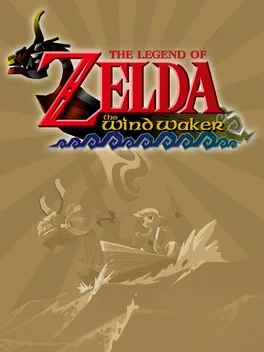
The Legend of Zelda: The Wind Waker

The Legend of Zelda: The Wind Waker\n\n- Introduction\n- Story & Setting\n- Gameplay\n- Platforms\n- Legacy\n- Fun Facts\n\n## Introduction\n\nWhen Nintendo first unveiled The Legend of Zelda: The Wind Waker for the GameCube, it sent shockwaves through the gaming community. Departing from the dark realism showcased in earlier tech demos, this title—often abbreviated by fans as TWW—embraced a vibrant, cel-shaded art style. This bold aesthetic choice gave the game a timeless, cartoon-like appearance that felt like playing through a living animated film. Whether you know it by its Japanese title, Zelda no Densetsu: Kaze no Takuto, or simply as Wind Waker, this entry remains one of the most distinctive chapters in the long-running franchise. It proved that the series could reinvent itself while maintaining the core of the Zelda experience through expressive characters and a vast world.\n\n## Story & Setting\n\nSet hundreds of years after the legendary events of Ocarina of Time, the world of Hyrule has been transformed. The kingdom is now submerged beneath a vast, sparkling ocean known as the Great Sea. The narrative follows a young boy named Link, who lives on Outset Island. On his twelfth birthday, his sister Aryll is kidnapped by a giant bird, the Helmaroc King. This event launches Link into a sprawling adventure where he joins forces with a sharp-witted pirate captain named Tetra and discovers a sentient, talking boat known as the King of Red Lions. The story of TLoZ: TWW is one of discovery, exploring the ruins of a forgotten past while navigating a sea full of secrets. In many international markets, this epic voyage is recognized as 塞尔达传说:风之杖 or 萨尔达传说:风之律动, reflecting its universal appeal and the musical themes that drive its plot.\n\n## Gameplay\n\nThe core mechanics of The Wind Waker build upon the innovative 3D foundation of its predecessors while introducing entirely new elements. Link utilizes his iconic sword and shield, but he also wields the titular Wind Waker—a magical conductor's baton. This tool allows Link to control the direction of the wind, which is crucial for sailing the King of Red Lions across the ocean. Exploration is central to the experience, as players must navigate 49 unique sectors of the Great Sea, discovering hidden islands, sunken treasures, and submarine outposts. The game features intricate puzzles, challenging combat, and classic dungeons filled with items like the Grappling Hook and the Deku Leaf. These light role-playing elements ensure a satisfying sense of progression as Link gathers Heart Containers and upgrades his equipment to face more formidable foes.\n\n## Platforms\n\nThis game was released on several platforms, primarily debuting as the flagship Zelda title for the Nintendo GameCube across different regions.\n\n \n\n## Legacy\n\nDespite the initial controversy surrounding its Toon Link visual style, the legacy of The Legend of Zelda: The Wind Waker is one of immense respect and influence. It challenged the industry's obsession with photorealistic graphics and proved that stylized art could provide a clearer, more expressive gameplay experience. The game has since been hailed as a masterpiece of design, with its expressive character animations and sweeping orchestral score receiving universal acclaim. Its influence can be seen in the vibrant aesthetics of later Nintendo titles, and it continues to be cited as one of the greatest video games of all time. Critics and fans alike now celebrate the risks Nintendo took with this project, acknowledging it as a high point in the series' history.\n\n## Fun Facts\n\nThere are many fascinating details behind the production of this classic. For instance, the developers used Link's oversized eyes as a gameplay mechanic; his gaze will often shift toward nearby points of interest or hidden items, subtly guiding the player through the environment. Additionally, the game's development schedule was extremely tight, which famously led to the removal of two entire dungeons from the final game to ensure a timely launch. These cut concepts were not entirely lost, as elements of them eventually found their way into subsequent Zelda entries. Furthermore, the Wind Waker baton itself was inspired by the role of a conductor, emphasizing the game's focus on rhythm and harmony within its vast, oceanic world.

Found 2 item(s) for sale

  • The Legend of Zelda: The Wind Waker

    Seller: retrogameplace

    Country of origin: Spain

    Status: loose

    Description:

    Uploaded Photo
    Image of
  • The Legend of Zelda: The Wind Waker

    Seller: retrogameplace

    Country of origin: Spain

    Status: loose

    Description:

    Uploaded Photo
    Image of