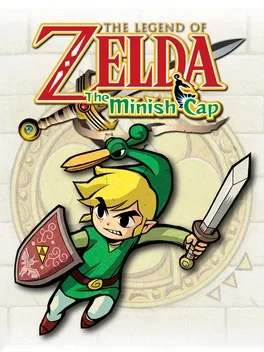
The Legend of Zelda: The Minish Cap
Introduction
The Legend of Zelda: The Minish Cap stands as a testament to the creative synergy between Nintendo and Capcom’s Flagship studio. Released during the twilight years of the Game Boy Advance, it remains a beloved entry known for its colorful art style and innovative shrinking mechanic. Known in various regions as Zelda no Densetsu: Fushigi no Bōshi, 塞尔达传说 神奇小帽, or Zelda no Densetsu: Fushigi no Boushi, this title successfully transitioned the aesthetic of The Wind Waker to a 2D top-down perspective. While many Zelda titles of the era experimented with multiplayer, The Minish Cap returned to the series' roots of solo exploration and deep dungeon-crawling, offering a refined experience that stands tall among its 16-bit and 32-bit predecessors.
Story & Setting
The narrative of The Minish Cap serves as a crucial origin story within the Zelda timeline. It explores the beginnings of the wind mage Vaati, a recurring antagonist in the Four Swords sub-series. The story begins during the Picori Festival in Hyrule, a celebration of the tiny Picori (or Minish) who once descended from the heavens to aid humanity. When Vaati shatters the sacred Picori Blade and turns Princess Zelda to stone, Link must set out to restore the blade. Early in his journey, he rescues Ezlo, a sentient, bird-like hat who grants him the ability to shrink to the size of a Minish. This dual-layered world—where a simple puddle becomes a vast lake and blades of grass become towering forests—defines the game’s unique charm and narrative depth.
Gameplay
At its core, The Minish Cap follows the traditional Zelda blueprint of exploring an overworld to find keys, items, and dungeons. However, the shrinking mechanic introduces a verticality and scale rarely seen in the series. Link can transform at specific portals, allowing him to enter tiny crevices, navigate rafters, or talk to the Minish people. This title also introduced the Kinstone system, where Link collects stone fragments and fuses them with NPCs to unlock secrets, treasure, or new paths. Traditional mechanics like the Spin Attack return, often taught by master swordsmen hidden throughout the land. Dungeons are meticulously designed, requiring players to alternate between human and Minish sizes to solve puzzles, such as navigating a temple built inside a literal drop of water or a gusty fortress in the sky.
This game was released on several platforms, including the Game Boy Advance, and has been made available via digital services on other Nintendo hardware.
Legacy
The Minish Cap is often cited as one of the most visually impressive games on the Game Boy Advance. Its use of vibrant colors, fluid animations, and expressive character sprites was heavily influenced by the 'Toon Link' style. While it was initially overshadowed by the hype of the larger console releases, it has grown into a cult classic. Many fans appreciate its tight pacing and the way it expanded the lore of the Picori and the Four Sword. It also proved that third-party developers, specifically Capcom, could handle the Zelda IP with the same level of care and polish as Nintendo’s internal teams, paving the way for further collaborations and a rich legacy of 2D adventure games.
Fun Facts
The Minish Cap is the third Zelda title developed by Capcom, following the Oracle of Seasons and Oracle of Ages. Despite being a solo adventure, it utilizes many sound assets and engine elements from the Four Swords game. A unique cameo includes Malon from Ocarina of Time, who appears in Hyrule Town selling Lon Lon Milk. Additionally, the game features a collection of figurines that Link can obtain by trading mysterious shells, a mechanic inspired by Nintendo’s own collectible culture. Interestingly, Ezlo is not just a tool; he is actually a Minish sage who was transformed into a cap by his treacherous apprentice, Vaati, making him one of the few companions in the series with a direct personal stake in the villain’s defeat.