Found 4 item(s) for sale
-
Send a Message to
-
Send a Message to
-
Send a Message to
-
Send a Message to
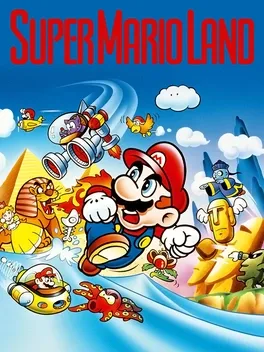
When the Nintendo Game Boy was released in 1989, it promised a revolution in portable entertainment. While Tetris was the pack-in title that captivated the world, Super Mario Land was the game that proved the "dot-matrix" screen could handle the heavy lifting of a true Nintendo platformer. Developed by Nintendo R&D1 rather than the usual team led by Shigeru Miyamoto, this title offered a surreal and distinct take on the plumber's adventures. It served as a flagship title for the handheld, showing millions of players that they could take the magic of Mario anywhere. As one of the most successful titles on the system, it remains a nostalgic touchstone for fans worldwide, often referred to by its Korean alternative name, 슈마랜, in certain gaming circles.
Unlike the majority of early Mario titles, Super Mario Land does not take place in the familiar Mushroom Kingdom. Instead, players are transported to the mysterious land of Sarasaland. The narrative shifts away from Bowser and Princess Toadstool. In this adventure, a malevolent extraterrestrial named Tatanga arrives in his spaceship to hypnotize the inhabitants of Sarasaland and kidnap its ruler, Princess Daisy. Mario must travel across four distinct kingdoms—Birabuto, Muda, Easton, and Chai—to rescue the princess and restore peace. This change in setting allowed for unique visual themes, ranging from ancient Egyptian-inspired deserts to Moai-statue-filled landscapes and even orientalist mountain ranges. The quest culminates in a high-stakes showdown in the clouds, marking a significant departure from the typical castle-based endings of the NES predecessors.
At its core, Super Mario Land is a side-scrolling platformer that adheres to the established logic of the series, with some notable twists. Mario moves from left to right, jumping on enemies like Goombas. However, some mechanics function differently due to the creative direction of Gunpei Yokoi’s team and the hardware constraints. For instance, Koopa shells no longer slide; instead, they explode after a brief moment, requiring players to adjust their timing. Power-ups also see a transformation: the Fire Flower is replaced by the Flower that grants the Super Ball ability. This Super Ball bounces off walls at 45-degree angles and can even be used to collect coins in hard-to-reach places.
Perhaps the most striking departure is the inclusion of vehicle-based levels. In the Muda Kingdom, Mario pilots the Marine Pop submarine in a side-scrolling shooter sequence. Later, in the Chai Kingdom, he takes to the skies in the Sky Pop aeroplane. These levels transform the game into a traditional "shmup," adding variety to the platforming. Despite only having twelve levels, the game’s difficulty increases steadily, offering a compact but challenging experience that was perfectly suited for gaming on the go.
This game was released on several platforms, including the original handheld hardware and modern digital storefronts.
The legacy of Super Mario Land is immense. It sold over 18 million copies, making it one of the best-selling games in the entire franchise. More importantly, it introduced Princess Daisy to the world, a character who would go on to become a staple in Nintendo's spin-off titles. The game also spawned two direct sequels, with the third installment eventually giving rise to the Wario Land series. This lineage means that the experimental ideas found in this Game Boy debut directly influenced the creation of one of Nintendo’s most iconic anti-heroes. For many players in regions where handhelds dominated, such as South Korea where it is known as 슈마랜, this was their primary introduction to the platforming genre.