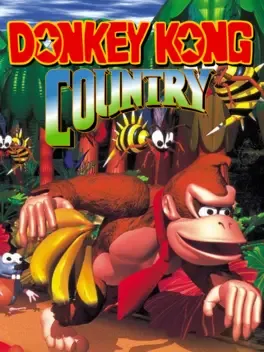
Donkey Kong Country
Introduction
In 1994, the gaming landscape changed forever when a British developer named Rare released a title that seemed to defy the technical limitations of its era. That game was Donkey Kong Country. Often referred to by fans as DKC, it was more than just a platformer; it was a visual showcase that proved the 16-bit Super Nintendo still had plenty of life left in it despite the impending arrival of 32-bit hardware. By utilizing groundbreaking pre-rendered 3D graphics, Rare created a lush, atmospheric world that felt significantly more advanced than any of its contemporaries. Today, the game remains a cornerstone of Nintendo’s library and a masterclass in atmospheric level design.
Story & Setting
The narrative of the game is a classic tale of heroism and snacks. The titular character, whom fans sometimes simply call Donkey Kong, wakes up to discover that his legendary banana hoard has been stolen from beneath his treehouse. The culprits are the Kremlings—a sinister army of anthropomorphic crocodiles—led by the villainous King K. Rool. Known in Japan as Super Donkey Kong, the game takes players on an epic trek across the diverse biomes of Donkey Kong Island. From the humid depths of the jungle and the precarious heights of snowy mountains to the industrial grime of factories and the treacherous waters of coral reefs, the setting provides a vibrant and ever-changing backdrop for the primate duo’s quest to reclaim their treasure.
Gameplay
At its core, DKC1 is a side-scrolling platformer, but it distinguishes itself through its unique