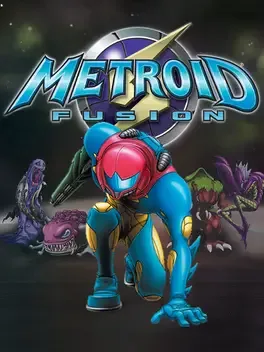
Metroid Fusion
Introduction
After an eight-year hiatus following the monumental success of Super Metroid, the bounty hunter Samus Aran finally returned to the spotlight in 2002. Released for the Game Boy Advance, Metroid Fusion—also known by its developmental title Metroid 4 and its Chinese title 密特罗德--融合—was a bold reimagining of the franchise. It had the difficult task of following one of the greatest games ever made while carving out its own identity on a handheld system. Developed by Nintendo R&D1, the game successfully blended the series' signature atmospheric exploration with a newfound focus on narrative and survival horror elements, creating an experience that felt both familiar and terrifyingly fresh.
Story & Setting
The narrative begins with Samus Aran acting as a bodyguard for researchers on the surface of planet SR388. During the mission, she is infected by a previously unknown, shapeshifting organism called the "X" Parasite. The infection nearly kills her, and her organic Power Suit must be surgically removed, leaving her body altered. She is only saved when doctors inject her with a vaccine created from the DNA of the last Metroid hatchling. This treatment fundamentally changes her biology: Samus is now part Metroid, making her the only creature capable of consuming and destroying the X Parasites.
Once recovered, Samus is dispatched to the Biologic Space Laboratories (BSL) research station, which has gone silent after an unexplained explosion. She quickly discovers that the station has been completely overrun by the X. Even more chillingly, the parasites have mimicked her own likeness at her peak power levels. This doppelgänger, known as the SA-X, stalks the corridors of the station, turning the hunter into the hunted.
Gameplay
Metroid Fusion retains the core "Metroidvania" mechanics of exploration and ability-based progression but introduces a more structured, mission-based flow. Guided by an onboard ship computer nicknamed "Adam," Samus navigates the various biomes of the BSL station. A significant departure from previous entries is the interaction with enemies; since Samus now possesses Metroid DNA, she must physically touch and absorb the X Parasites released by defeated foes to replenish health and ammunition.
Navigating the station is a tense affair. Because Samus starts the game in a weakened state with a vulnerable new suit, the presence of the SA-X introduces a stealth-horror dynamic. Encountering the SA-X early in the game usually results in an instant death, forcing players to hide in shadows or use vents to avoid detection. This cat-and-mouse gameplay adds a layer of psychological tension rarely seen in action-platformers of the era.
This game was originally released on the Game Boy Advance and has since been made available on several digital storefronts and subscription services provided by Nintendo.
Legacy
Metroid Fusion is widely regarded as one of the best titles in the Game Boy Advance library. It proved that the Metroid formula could work within a more linear, narrative-driven framework without losing its sense of isolation. Critically, it was praised for its tight controls, vivid color palette, and the terrifying implementation of the SA-X. For nearly two decades, Fusion stood as the final point in the series' chronological timeline. Its influence is most heavily felt in the 2021 sequel, Metroid Dread, which finally continued the story threads established here, solidifying the importance of the Metroid-X conflict in the franchise's lore.
Fun Facts
- If players connected Metroid Fusion to Metroid Prime on the GameCube using a link cable, they could unlock the ability to play as Samus in her Fusion Suit in the 3D game.
- The game features a secret message from the developers that can only be seen if the player performs a series of highly difficult "Shinesparks" to enter a navigation room earlier than intended.
- The SA-X is actually capable of making "human-like" decisions, such as using Power Bombs to find the player, making it one of the most advanced AI enemies on the GBA.