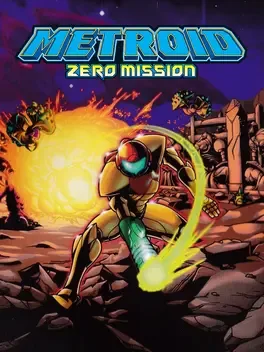
Metroid: Zero Mission
Introduction
In the pantheon of Nintendo classics, few remakes are held in as high regard as Metroid: Zero Mission. Released in 2004 for the Game Boy Advance, this title is far more than a simple graphical update of the 1986 NES original. It represents a complete reimagining of Samus Aran's first foray onto Planet Zebes, incorporating the refined mechanics, atmospheric storytelling, and intricate level design that the series became known for in later entries. By bridging the gap between the primitive roots of the 8-bit era and the sophisticated exploration of the 16-bit and 32-bit eras, Zero Mission provides the definitive origin story for the galaxy's most famous bounty hunter. Whether you are a veteran speedrunner or a newcomer looking to understand the roots of the Metroidvania genre, this game offers an unparalleled experience in tight, atmospheric action.
Story & Setting
The narrative of Metroid: Zero Mission takes us back to the beginning of the timeline. Samus Aran is dispatched by the Galactic Federation to the planet Zebes to stop the Space Pirates from using the parasitic organisms known as Metroids as biological weapons. While the original game only scratched the surface of this cataclysmic event, Zero Mission fleshes out the world with cinematic cutscenes and environmental storytelling. Known in certain markets by its alternative name 密特罗德--零点任务, the game follows Samus as she infiltrates the subterranean labyrinths of Brinstar, Norfair, and Kraid’s Lair. The setting is oppressive and alien, filled with hostile flora and fauna. However, the true surprise comes after the defeat of Mother Brain. Unlike the original game, the story continues into an expanded epilogue where a suitless Samus must use stealth to survive a crash-landing near the Space Pirate Mother Ship, adding a layer of vulnerability rarely seen in the series.
Gameplay
At its core, Metroid: Zero Mission is a 2D action-adventure game that focuses on exploration and ability-based progression. Players start with a basic power beam and a limited jump, but as they explore the winding corridors of Zebes, they uncover classic upgrades like the Morph Ball, Screw Attack, and the Plasma Beam. The controls are incredibly fluid, inheriting the momentum and precision found in Metroid Fusion while adding the ability to aim diagonally with ease. One of the most significant additions is the inclusion of a map system and Chozo Statues that provide hints, which helps mitigate the aimless wandering that sometimes plagued the NES original. The game is also a paradise for speedrunners; its design encourages "sequence breaking," allowing skilled players to obtain items out of order and bypass large sections of the game through clever use of wall-jumping and bomb-jumping mechanics. This depth of play makes it infinitely replayable.
This game was released on several platforms, including the original handheld hardware and later digital distribution services for home consoles.
Legacy
The legacy of Metroid: Zero Mission is defined by its perfection of the remake formula. It successfully modernized a classic while maintaining the