Found 3 item(s) for sale
-
Send a Message to
-
Send a Message to
-
Send a Message to
Introduction Story & Setting Gameplay Platforms Legacy Fun Facts
In the late 1980s, the video game industry witnessed a handheld revolution with the launch of the Nintendo Game Boy. Konami, already a household name due to the massive success of the Castlevania series on the NES, sought to bring its iconic gothic horror experience to the palm of players' hands. Released in 1989, Castlevania: The Adventure served as the portable debut for the franchise. Known in Japan as Dracula Densetsu, this title was a technical showcase of what the monochrome screen could achieve, offering a moody and challenging experience that expanded the lore of the Belmont clan. While it significantly differed from its console counterparts in terms of speed and mechanics, it remains a fascinating piece of gaming history for fans of the vampire-hunting saga.
Chronologically, Castlevania: The Adventure takes place approximately one hundred years before the events featuring the series' most famous protagonist, Simon Belmont. In this era, the dark lord Dracula has once again risen to terrorize the land of Transylvania, and the duty to stop him falls to a new hero. Players step into the boots of Christopher Belmont, an ancestor of Simon and a formidable warrior in his own right. The narrative follows Christopher’s arduous journey through the count’s cursed castle to put an end to the darkness. Interestingly, in certain international markets, the game was sometimes referred to by its alternate title, The Legend of Dracula, emphasizing the mythic nature of this early encounter between the Belmont lineage and the lord of vampires. The setting is classic Castlevania, featuring crumbling walls, treacherous traps, and an army of the undead.
The core mechanics of Castlevania: The Adventure follow the established side-scrolling platformer tradition, though with several unique twists tailored for the handheld format. Christopher Belmont wields the legendary Vampire Killer whip, which can be upgraded twice by collecting hearts and power-ups. The first upgrade increases the whip's length and power, while the second allows the whip to fire projectile fireballs—a mechanic rarely seen in other entries of the series. However, taking damage from an enemy will downgrade the whip's power, adding a layer of tension to every encounter. Unlike the NES games, this title notably lacks the traditional sub-weapons like the holy water or the cross. Movement is slower and more deliberate than other entries, requiring precise jumps and timing. The game consists of four sprawling stages, each culminating in a challenging boss battle that tests the player's mastery over Christopher’s limited but powerful move set.
This game was released on several platforms, including the original Game Boy and the Nintendo 3DS handheld systems.
Despite some criticisms regarding its slow movement speed and high difficulty curve, Castlevania: The Adventure left a lasting mark on the franchise. It proved that a complex action-adventure could successfully transition to a portable format. Its soundtrack, composed by Shigeru Fukutake, is often cited as one of the best on the Game Boy, featuring energetic tracks that pushed the hardware's sound chip to its limits. The game eventually received a full-scale remake on the Nintendo Wii titled Castlevania: The Adventure ReBirth, which reimagined the levels and mechanics for a modern audience. Today, it is remembered as the starting point for Konami's long-standing tradition of high-quality handheld Castlevania titles that would eventually lead to masterpieces on the Game Boy Advance and DS.
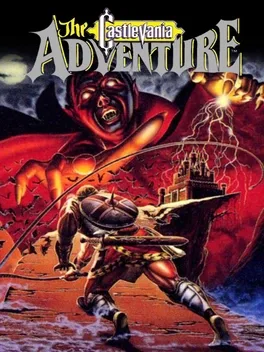
One of the most surprising facts about this title is the complete absence of the series' staple sub-weapons; the developers opted to focus entirely on whip upgrades instead. In Japan, the title Dracula Densetsu translates literally to "The Legend of Dracula," a name that was used for the European marketing of its sequel. Another interesting tidbit is that the fireball-shooting whip mechanic was largely a result of the developers wanting to give players a ranged option without the complexity of managing separate sub-weapon sprites on the early Game Boy hardware. Finally, if you look closely at the original North American box art, you can see that Christopher Belmont's design bears a striking resemblance to the classic 80s fantasy aesthetic popularized by films like Conan the Barbarian and He-Man.