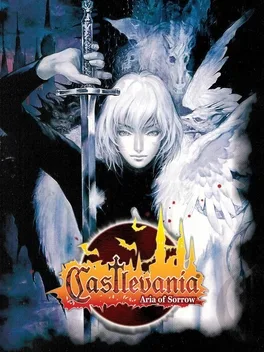
Castlevania: Aria of Sorrow
Introduction
Castlevania: Aria of Sorrow is widely regarded as one of the finest entries in the long-running Castlevania series, successfully bridging the gap between classic gothic horror and innovative modern RPG mechanics. Released in 2003, it served as the third and final installment for the Game Boy Advance, pushing the handheld's hardware to its absolute limits. By refining the "Metroidvania" style popularized by Symphony of the Night, Aria of Sorrow introduced a unique soul-absorption mechanic that transformed the way players interacted with the game's world. Whether you are a veteran vampire hunter or a newcomer to the franchise, this title offers a deep, atmospheric, and rewarding experience that remains a benchmark for the genre.
Story & Setting
The narrative of Aria of Sorrow takes a bold step away from the traditional 17th and 18th-century settings of its predecessors. The year is 2035, and the world has moved beyond the era of the Belmont clan’s constant battles with Dracula. The protagonist, Soma Cruz, is a young transfer student in Japan who, along with his childhood friend Mina Hakuba, heads to the Hakuba Shrine to witness the first solar eclipse of the 21st century.
However, things take a dark turn when Soma suddenly blacks out, only to awaken inside a mysterious and massive castle. He soon learns that this fortress is none other than Dracula's Castle, currently sealed within the solar eclipse itself. To find a way home, Soma must navigate the castle's dangerous labyrinths and confront perilous monsters at every turn. Along the way, he encounters a mysterious cast of characters, including the stoic Genya Arikado and the enigmatic Graham Jones, while discovering that he possesses a strange power to harvest the souls of his enemies. Soma must escape before the latent evil of the castle consumes his very identity.
Gameplay
The core of the gameplay revolves around the "Tactical Soul" system, a revolutionary mechanic that sets this title apart. As Soma defeats enemies, there is a chance he will absorb their soul, granting him a specific power based on that creature. These souls are categorized into four distinct types: Bullet (offensive projectiles), Guardian (continuous support or transformation), Enchant (passive stat boosts), and Ability (permanent movement upgrades like double-jumping). With over 100 different souls to collect, players can experiment with thousands of combinations to suit their preferred playstyle.
In addition to the soul system, Aria of Sorrow maintains the series' traditional exploration-heavy design. Players must find new items and abilities to unlock previously inaccessible areas of the castle. The game features a wide variety of weapons, ranging from classic daggers and broadswords to futuristic handguns and massive hammers. This diversity, combined with the leveling system and equipment management, provides a rich RPG experience that encourages thorough exploration and strategic combat.
This game was released on several platforms, including the original handheld Game Boy Advance and later through digital distribution services on the Wii U.
Legacy
The legacy of Aria of Sorrow is monumental. At the time of its release, it was lauded for its stunning pixel art, hauntingly beautiful soundtrack composed by Michiru Yamane, and its addictive soul-collecting mechanic. It received near-universal acclaim and is frequently cited as one of the best games ever made for the Game Boy Advance. In Japan, the game is also known as Castlevania: Minuet of Dawn or Castlevania: Akatsuki no Menuett, titles that highlight the poetic and transitionary nature of the game’s story. Its success was so significant that it spawned a direct sequel, Dawn of Sorrow, for the Nintendo DS, making Soma Cruz one of the few protagonists in the series to lead multiple games.
Fun Facts
- The year 2035 was chosen as the setting because it is the year a real-life total solar eclipse is predicted to be visible in Japan.
- Despite being a handheld game, many fans consider it the true spiritual successor to Symphony of the Night due to its depth and map design.
- The Japanese title, Castlevania: Akatsuki no Menuett, translates literally to "Minuet of Dawn."
- Soma Cruz's white trench coat was specifically designed to make him stand out from the leather-clad Belmont protagonists of the past.
- The game features multiple endings, which can only be unlocked by collecting specific souls that reveal Soma’s true lineage.