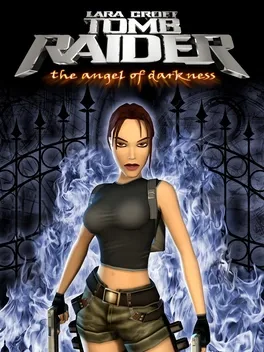
Tomb Raider: The Angel of Darkness
Introduction
Story & Setting
Gameplay
Platforms
Legacy
Fun Facts
Introduction
Released in 2003, Tomb Raider: The Angel of Darkness represented a monumental shift for the iconic franchise. Often referred to by fans as TR6 or Tomb Raider 6, this title was the first entry designed for the sixth generation of consoles. It promised a darker, more mature Lara Croft, moving away from the bright exotic ruins of previous titles into the gritty urban underbelly of Europe. Whether you know it as TRVI or by its full title, Lara Croft: Tomb Raider - The Angel of Darkness, this game remains one of the most discussed and debated chapters in gaming history.
Story & Setting
The narrative serves as a direct sequel to Tomb Raider: Chronicles. The story begins with a hardened, cynical Lara Croft meeting her former mentor, Werner Von Croy, in Paris. Following a heated argument and a sudden blackout, Lara finds Von Croy murdered and herself framed for the crime. This setup turns the world's most famous archaeologist into a fugitive.
The journey takes players through the rain-slicked streets of Paris and the industrial shadows of Prague as Lara uncovers a conspiracy involving the Monstrum and a secret society known as the Cabal. Internationally, the game reached diverse audiences under titles such as Tomb Raider : L'Ange des Ténèbres in France, Tomb Raider: El Ángel de la Oscuridad in Spanish-speaking regions, and Tomb Raider: Ангел Тьмы in Russia. The plot weaves elements of alchemy and the supernatural, making it a standout noir thriller within the series.
Gameplay
The gameplay of Tomb Raider AoD introduced several innovations intended to modernize the formula. For the first time, Lara could engage in stealth mechanics, allowing her to duck, sneak, and perform "hug-the-walls" walking to avoid detection. Close-combat moves were also added to her repertoire, giving her more options than just dual-pistol gunplay.
A unique "RPG-lite" element was the skill-building system. Lara had to build her physical strength by performing specific actions, such as moving heavy boxes or shimmying along cables. Once a power-up was triggered through these sequences, she could access areas previously out of reach. The core loop still involved running, dodging, performing flying leaps, and solving intricate platforming puzzles while collecting weapons, ammunition, artifacts, and money.
This game was released on several platforms, including the PlayStation 2 and Windows PC, catering to different regional markets.
Legacy
The legacy of Tomb Raider: The Angel of Darkness is complex. Known in some regions as 古墓奇兵:暗黑天使 or 古墓丽影:黑暗天使, the game's development was famously troubled, leading to a rushed release that left many planned features on the cutting room floor. Despite the technical bugs that plagued its launch, it has gained a massive cult following over the years. Fans praise its ambitious story, haunting soundtrack by Peter Connelly, and the introduction of Kurtis Trent, a secondary playable character. It serves as a bridge between the classic era of Core Design and the subsequent reboot by Crystal Dynamics.
Fun Facts
- During its early development phase, the game had the unusual working title Tomb Raider: The Pretty Fugitive.
- The game was originally envisioned as the first part of a trilogy that would have further explored the Nephilim storyline.
- While many know it simply as Tomb Raider VI: The Angel of Darkness, the game features significantly more dialogue and narrative choices than any of its predecessors.
- Despite the initial criticism, the character model for Lara in this game is often cited by fans as one of her most iconic and stylish designs.