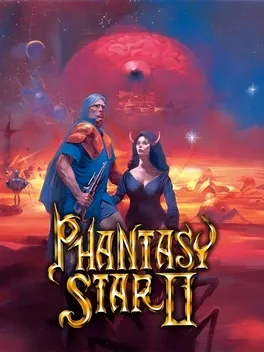
Phantasy Star II
Table of Contents
Introduction
Phantasy Star II, also known as Phantasy Star II: The End of the Lost Age, stands as a monumental pillar in the history of Japanese Role-Playing Games (JRPGs). Released in 1989 for the Sega Genesis, it was a massive leap forward for the genre, offering a sci-fi narrative that was far ahead of its time. Commonly referred to by fans as Phantasy Star 2, this title significantly expanded the scope of the series. It moved away from the more traditional fantasy tropes of its contemporaries and leaned heavily into a dystopian space-opera aesthetic. As one of the earliest 16-bit RPGs, it set a high bar for storytelling and world-building, cementing its place as a classic for Sega enthusiasts.
Story & Setting
The narrative of Phantasy Star II: At The End of Restoration is set 1,000 years after the events of the first game. The Algol Star System, once a wild frontier, has become a technological utopia under the watchful eye of a mysterious supercomputer known as Mother Brain. On the planet Mota, the climate has been terraformed to support lush life, but things are beginning to go wrong. Biomonsters are appearing, and the systems keeping the planet habitable are failing. Players take on the role of Rolf, a government agent tasked with investigating these malfunctions. Along his journey, he is joined by a diverse cast of characters, including the mysterious bio-engineered girl Nei. The story is famous for its dark themes and a climax that remains one of the most talked-about endings in gaming history.
Gameplay
In terms of mechanics, the gameplay is similar to the original Phantasy Star, though it introduced several significant changes. The game features a turn-based battle system where players command a party of up to four characters. There are eight playable characters in total, each possessing a unique set of preferred weapons and armor, as well as specific techniques suited to their job classes—ranging from hunters and doctors to thieves and scientists. Unlike the first entry, which utilized a first-person perspective for dungeons, Phantasy Star II abandoned that view. Instead, it uses a top-down perspective for exploration and a dynamic third-person view during battles, showing the characters' backs as they strike enemies. Players must navigate incredibly complex, multi-floored dungeons and survive grueling random encounters in the overworld to progress the story.
This game was released on several platforms, including the Sega Mega Drive and various digital collections for modern systems under the name PS2.
Legacy
The legacy of Phantasy Star II: Kaerazaru Toki no Owari ni is defined by its difficulty and its maturity. At the time of its release, it was lauded for its cinematic presentation and its deep, emotional narrative. It was a pioneer in the industry, proving that video games could tell complex stories with tragic elements. The sheer size of the game world and the difficulty of its navigation required players to be dedicated and strategic. Even decades later, it is remembered as a cornerstone of the Sega library. Its influence can be seen in many modern RPGs that prioritize world-building and narrative consequences over simple questing.
Fun Facts
One of the most interesting pieces of trivia is that the Japanese title, Fantashii Sutaa Tou Kaerazaru Toki no Owari ni, translates roughly to "At the End of the Time That Cannot Be Returned." Because the game's dungeons were so notoriously difficult and sprawling, the original North American release actually came bundled with a 110-page strategy guide to ensure players wouldn't get lost. Additionally, the game was a massive technical achievement for 1989, utilizing a 6-megabit cartridge, which was considered huge for the era. This allowed for detailed battle animations and a sprawling soundtrack that became a hallmark of the series.