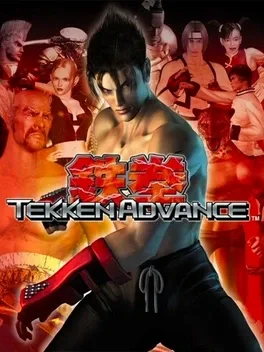
Tekken Advance
Introduction
Tekken Advance arrived on the Game Boy Advance in late 2001, marking a historic moment for one of the most prestigious fighting game franchises in history. For years, the Tekken series was synonymous with the PlayStation brand, standing as a pillar of Sony’s console dominance throughout the late 90s. However, the release of the GBA provided Namco with a unique opportunity to shrink their massive 3D fighting engine into a portable format for the very first time. Despite the inherent technical limitations of handheld hardware at the time, Tekken Advance managed to capture the essence and fluid rhythm of its arcade and console counterparts. It delivered a surprisingly deep fighting experience that fit right in a player's pocket, proving that the King of Iron Fist Tournament could thrive outside of its traditional home.
Story & Setting
While most Tekken titles are known for their intricate family bloodlines, corporate espionage, and supernatural entities, Tekken Advance takes a slightly more streamlined approach. The game is officially considered non-canonical, meaning its specific ending sequences and plot points do not impact the main timeline of the series moving forward. However, it is heavily rooted in the narrative fabric and atmosphere of Tekken 3. The setting is once again the King of Iron Fist Tournament, hosted by the ruthless and powerful Heihachi Mishima. Players choose from a roster of ten iconic fighters—including Jin Kazama, Hwoarang, Ling Xiaoyu, and Yoshimitsu—as they battle through various international stages to reach the final confrontation. Though the narrative is secondary to the technical combat, the familiar character motivations and the high-stakes tournament setting provide a nostalgic and engaging backdrop for fans of the franchise.
Gameplay
The most impressive feat of Tekken Advance is how it successfully translates 3D combat mechanics into a 2D environment. To accommodate the Game Boy Advance’s directional pad and button layout, the developers simplified the control scheme, moving from the traditional four-button limb system to a more condensed version. Despite this shift, the game retains the series' signature mechanics with remarkable fidelity. Players can still perform side-steps, complex throws, and the series' famous "Ten Hit Combos." The juggle system, which allows players to keep opponents in the air for extended damage, remains a core component of high-level play. One of the unique additions to this version is the "3-on-3" team battle mode, where players select a trio of fighters to take on opponents, adding a layer of strategy and variety to the handheld experience. The visuals utilize high-quality 2D sprites rendered from the actual 3D models of Tekken 3, giving the game a "pseudo-3D" aesthetic that was highly praised for its fluidity.
Tekken Advance was specifically designed to take advantage of the Game Boy Advance's 32-bit architecture, making it a standout title for the platform during its early lifecycle.
Legacy
Tekken Advance holds a special place in gaming history as the first entry in the series to appear on a Nintendo console. At release, critics were skeptical that a handheld could handle the complex animations and precise frame timing required for a Tekken game, but the title largely proved the doubters wrong. It received positive reviews for its smooth frame rate and faithful recreation of the Tekken "feel." It demonstrated that high-fidelity fighting games didn't necessarily need a powerful home console to be competitive and fun. Today, it is remembered as one of the best fighting games on the GBA, standing alongside other handheld classics. It paved the way for future portable entries in the series, such as Tekken: Dark Resurrection on the PSP and Tekken 3D: Prime Edition on the 3DS.
Fun Facts
- Tekken Advance is the only game in the entire series where Gun Jack is the only "heavyweight" character available to the player from the start.
- Because the GBA hardware only has two shoulder buttons and four face buttons, the input for certain moves had to be entirely reworked compared to the PlayStation versions.
- The game features a "Gold" version of Heihachi Mishima as an unplayable final boss in certain modes, emphasizing his status as the ultimate tournament host.
- After this release, it took nearly a decade for another Tekken game to appear on a Nintendo system, which eventually happened with the release of Tekken Tag Tournament 2 on the Wii U.