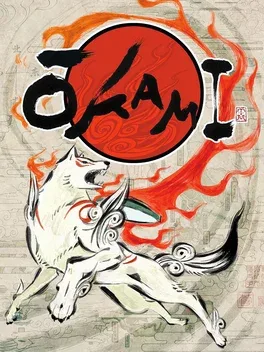
Ōkami
Introduction
Story & Setting
Gameplay
Platforms
Legacy
Fun Facts
Introduction
In the vast landscape of action-adventure games, few titles manage to capture the spirit of an entire culture as vividly as Ōkami. Originally developed by the legendary Clover Studio and published by Capcom, this title stands as a poetic tribute to Japanese art and mythology. Often referred to by players as Okami or Ookami, the game is widely celebrated for its unique visual identity, which looks like a living sumi-e ink wash painting come to life. From the moment the white wolf Amaterasu steps onto the screen, players are transported into a world where every movement feels like a stroke of a brush, blending traditional aesthetics with modern gaming mechanics in a way that remains unparalleled even decades after its release. It is a journey that is as much about restoring beauty to the world as it is about defeating the forces of darkness.
Story & Setting
The narrative of Ōkami is a grand tapestry woven from Shinto myths and local folklore, set during a stylized version of classical Japanese history. The story follows Amaterasu, the sun goddess, who descends to the mortal realm in the form of a white wolf named Shiranui. The land of Nippon has been plunged into darkness and cursed by the eight-headed demon Orochi, and it is up to Amaterasu to restore color and life to the world. Accompanied by the tiny, boisterous wandering artist Issun, the goddess embarks on a journey to regain her lost powers. The setting is a lush, vibrant depiction of ancient Japan, filled with bustling villages, mystical forests, and treacherous dungeons, all teeming with spirits and legendary figures that bring the rich cultural heritage of the region to the forefront of the experience.
Gameplay
The core of Ōkami’s gameplay is a seamless blend of exploration, combat, and puzzle-solving, often compared to the legendary Legend of Zelda series for its structure and sense of discovery. However, its most innovative mechanic is the Celestial Brush. At any point, players can freeze time and bring up a canvas, using a brush to draw specific symbols that manifest as miracles in the game world. Drawing a circle in the sky creates a sun; a quick horizontal line acts as a Power Slash to cut through enemies and obstacles. This gesture-based system is integrated into every aspect of the game, from combat flourishes to environmental interactions, such as blooming withered trees or summoning the wind. Outside of the brush mechanics, Amaterasu’s wolf-like agility allows for fluid movement and visceral combat, where she utilizes various Divine Instruments like mirrors, beads, and swords to vanquish the forces of darkness.
This game was released on several platforms, including the Wii and PlayStation 2.
Legacy
The legacy of Ōkami is one of bittersweet triumph. While the game received near-universal critical acclaim and won numerous Game of the Year awards upon its debut, it was initially a commercial disappointment. This led to the eventual closure of Clover Studio, though its key members went on to form PlatinumGames. Over the years, however, Okami has achieved legendary cult status and has been celebrated as a pinnacle of artistic achievement in gaming. Its influence can be seen in the rise of stylized art in later titles and the exploration of cultural narratives. It has been ported to multiple generations of consoles, ensuring that new audiences can always experience its magic. It remains a benchmark for how video games can serve as a medium for artistic expression, proving that a strong aesthetic vision can be just as impactful as technical prowess.
Fun Facts
One of the most interesting aspects of the game is its title. In Japanese, the word Ōkami (狼) means wolf, but it is also a homophone for Great God (大神), making it a clever pun on the protagonist's dual nature. During development, the team at Clover Studio originally experimented with a more realistic 3D art style, but they found that the hardware of the time could not handle the level of detail they wanted for a realistic nature simulation. This technical limitation led them to the iconic cel-shaded sumi-e style that defines the game today. Additionally, the game includes numerous references to classic Japanese tales, such as the stories of Princess Kaguya and Susanoo, making it a delight for those familiar with the source material.