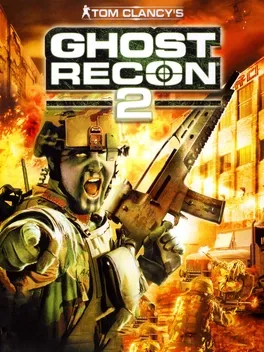
Tom Clancy's Ghost Recon 2
Introduction
When Tom Clancy’s Ghost Recon 2 debuted in 2004, it marked a significant shift for the franchise, transitioning the series from its hardcore PC tactical roots into a more cinematic, action-oriented experience tailored for the booming console market. As the follow-up to the highly successful original 2001 title, Ghost Recon 2 sought to redefine what it meant to lead an elite squad of U.S. Special Forces. By blending intense military realism with accessible control schemes and high-stakes storytelling, the game successfully captured the tension of modern warfare. It remains a pivotal entry in the Tom Clancy library, known for its challenging missions and for introducing a perspective that would eventually become a standard for the third-person shooter genre.
Story & Setting
The narrative of Ghost Recon 2 is set in the then-near-future of 2007 (on Xbox) and 2011 (on PS2), focusing on a volatile geopolitical crisis in East Asia. The primary antagonist is an ambitious and ruthless North Korean general who has begun diverting international humanitarian aid intended for his starving citizens. Instead of feeding his people, the general uses these resources to bolster his military forces and consolidate political power, threatening to ignite a full-scale war in the region.
Players step into the boots of Captain Scott Mitchell, leading the infamous "Ghosts"—the U.S. Army’s most elite Special Forces unit. The campaign unfolds over 11 sprawling missions that take the squad through diverse environments, from dense, rain-soaked jungles to bombed-out urban ruins. The Ghosts are tasked with dismantling the general’s infrastructure, rescuing allies, and eventually neutralizing the threat to prevent a global catastrophe. The story is told through high-intensity briefings and mid-mission updates that keep the pressure mounting at every turn.
Gameplay
Gameplay in Ghost Recon 2 is built around squad-based tactics and precise shooting. Unlike many "run-and-gun" shooters of the era, this title rewards patience, scouting, and the clever use of cover. One of the most significant additions to this sequel was the introduction of a third-person over-the-shoulder viewpoint. While the classic first-person "from the eyes" view remained available for purists, the third-person camera allowed players to have a better sense of their surroundings and their character’s stance.
The 11-mission single-player campaign is notably lengthy and requires players to issue commands to their AI teammates, such as suppressing fire or flanking maneuvers. Beyond the solo experience, the game featured robust multiplayer options. Both online and offline modes allowed for competitive play, ranging from standard Deathmatch to complex team-based objectives. Furthermore, the entire campaign could be tackled in co-op mode with a friend, adding a layer of strategic depth as players coordinated their movements in real-time. The inclusion of the Havok physics engine also brought a new level of environmental interaction and realism to the battlefield.
This title was released across several major sixth-generation consoles, ensuring tactical fans could enjoy the action regardless of their hardware preference.
Legacy
Tom Clancy’s Ghost Recon 2 is remembered as a bridge between the classic tactical simulations of the early 2000s and the modern "Advanced Warfighter" era. It was one of the first major titles to prove that tactical shooters could thrive on consoles with the right control adjustments. Its success helped cement Captain Scott Mitchell as the face of the franchise for years to come. While it faced some criticism for moving away from the extreme realism of the first game, it gained a massive following for its polished presentation and addictive multiplayer. The game also played a crucial role in the early success of Xbox Live, showcasing the potential for squad-based online play on consoles.
Fun Facts
Interestingly, Ghost Recon 2 is famous for having two completely different storylines depending on the platform. The Xbox version acts as a sequel to the first game, taking place in 2007, while the PlayStation 2 and GameCube versions act as a prequel set in 2011 (despite being released later). Additionally, the game was originally supposed to have a PC version, but it was ultimately canceled, making this one of the few entries in the series to be a console exclusive for its time. Another interesting note is that the game's cinematic music was composed by Bill Brown, who received critical acclaim for his ability to blend orchestral scores with the tension of modern combat.