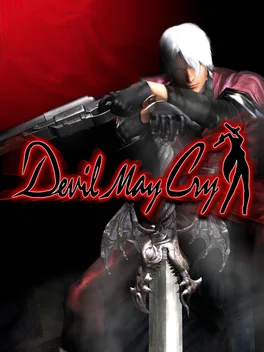
Devil May Cry
Introduction
When Devil May Cry first burst onto the scene in 2001, it redefined the expectations for 3D action games. Known by the acronym DMC and referred to in some regions as 鬼泣, this title was a bold departure from the slower-paced survival horror games that dominated the era. It introduced a protagonist who didn't just survive encounters with the supernatural but dominated them with flair, arrogance, and unmatched skill. Originally conceived as an evolution of a famous horror franchise, it eventually carved out its own unique identity, blending gothic aesthetics with fast-paced, high-octane combat. Today, it stands as the grandfather of the "character action" or "stylish action" subgenre, setting a benchmark for precision and presentation that many modern titles still struggle to emulate.
Story & Setting
The narrative follows Dante, a silver-haired mercenary and private investigator who runs a paranormal agency named "Devil May Cry." Dante is no ordinary human; he is the son of the legendary demon knight Sparda, who rebelled against his own kind to protect humanity. The story kicks off when a mysterious woman named Trish crashes into Dante's office and recruits him to stop the return of the demon king Mundus. The setting is primarily Mallet Island, a dark, atmospheric location filled with gothic castles, eerie catacombs, and otherworldly dimensions. As Dante explores the island, he uncovers the truth about his lineage and faces off against powerful lieutenants of the underworld, leading to an epic confrontation that determines the fate of the human realm.
Gameplay
Devil May Cry is defined by its deep and rewarding combat mechanics. The most revolutionary feature is the Stylish Rank system, which encourages players to vary their attacks and maintain momentum. Combat is graded in real-time—from "Dull" to "Stylish"—based on how effectively the player chains together sword strikes and gunshots without taking damage. Unlike earlier titles from the same developers that used fixed, pre-rendered backgrounds, Devil May Cry utilized a dynamic camera system to keep up with the intense, vertical nature of the fights. The game is structured into Missions, which act as individual chapters. At the end of each mission, players receive a grade based on their speed, the number of Red Orbs collected, and the amount of damage sustained. Red Orbs serve as the game's currency, allowing players to purchase upgrades, new abilities, and items to aid Dante on his journey. Players can switch between melee weapons like the Alastor sword and long-range firearms like Dante’s signature dual pistols, Ebony and Ivory, to create complex and devastating combos.
This game was released on several platforms, primarily debuting as a hallmark title for the PlayStation 2 across various global regions.
Legacy
Few games have had as profound an impact on the action genre as Devil May Cry. By prioritizing player expression and skill over simple button mashing, it paved the way for series like God of War, Bayonetta, and Ninja Gaiden. Its success proved that there was a massive market for high-difficulty, high-reward action titles. Dante himself became a cultural icon, representing the "cool" anti-hero archetype of the early 2000s. The franchise has since expanded into multiple sequels, prequels, and even an animated series, maintaining a loyal fanbase that celebrates the series' commitment to technical depth and over-the-top spectacle.
Fun Facts
One of the most famous pieces of trivia regarding Devil May Cry is its origin story; it began development as an early version of Resident Evil 4. Director Hideki Kamiya's vision for the game became so action-heavy that it was eventually spun off into its own independent IP. Additionally, the combat's "juggling" mechanic—where players keep enemies in the air with gunfire—was actually inspired by a bug found in the game Onimusha: Warlords. Instead of fixing the glitch, the developers realized it was incredibly fun and built an entire combat system around the concept of gravity-defying maneuvers.