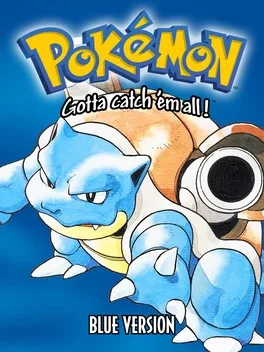
Pokémon Blue Version\n\n## Table of Contents\n\nIntroduction\nStory & Setting\nGameplay\nPlatforms\nLegacy\nFun Facts\n\n## Introduction\n\nPokémon Blue Version, known to many fans in its native Japan as Pokettomonsutaa ao or Pocket Monster blue, occupies a unique and prestigious place in the annals of gaming history. Released initially as a special mail-order edition through CoroCoro Comic in 1996, it served as the first solitary \"third version\" or minor revision within the core Pokémon series. While the original Red and Green versions sparked the initial fire of the franchise, Blue was designed to refine that experience. It offered updated graphics, polished sound, and the removal of several notorious glitches that had plagued the earlier titles. For many, this was the definitive way to experience the first generation of Pokémon, providing a more stable and aesthetically pleasing journey through the world of digital monsters.\n\n## Story & Setting\n\nSet in the sprawling and diverse Kanto region, the narrative of the game follows a young, ambitious trainer from the quiet Pallet Town. After receiving a choice of three starter Pokémon from the esteemed Professor Oak, the player embarks on an epic journey to collect eight Gym Badges, challenge the Elite Four, and eventually claim the title of Pokémon Champion. Along the way, players must contend with a persistent rival and the nefarious activities of Team Rocket, a criminal organization intent on exploiting Pokémon for profit. Whether you are familiar with the title as Pokémon Bleu in French-speaking regions or Pokémon Blau in Germany, the story remains a timeless coming-of-age tale. The setting is rich with lore, from the haunting atmosphere of Lavender Town’s Pokémon Tower to the high-tech marvels found in Saffron City’s Silph Co. building.\n\n## Gameplay\n\nThe core mechanics found in Pokémon Blu and Pokémon Azul revolutionized the role-playing genre for handheld consoles. Players traverse the overworld, catching wild creatures using various types of Poké Balls. The turn-based battle system is deep and strategic, relying on a complex elemental typing chart where Fire, Water, Grass, and other types interact in a rock-paper-scissors fashion. Training a team involves more than just leveling up; it requires careful move set management and understanding evolution, where many Pokémon transform into more powerful forms once specific criteria are met. Even though Pokemon Blue was released as a standalone revision in Japan, it maintained the vital social aspect of the series. Players could connect via a Link Cable to trade Pokémon or engage in head-to-head battles. Interestingly, the game engine and refined script of this version eventually became the foundation for the international Pokémon Version Bleu, setting the standard for the global launch.\n\n## Platforms\n\nThis iconic title was originally designed for handheld play and has seen various re-releases on digital storefronts to allow new generations of fans to enjoy its classic charm.\n\n
\n\n## Legacy\n\nThe legacy of this specific version is profound, particularly regarding its influence on the Western market. When Nintendo decided to bring the series to international audiences, they chose the localized titles Pokémon Edición Azul and Pokémon Versão Azul. However, instead of using the original Japanese Red or Green as a base, developers used the improved Japanese Blue engine for all international releases of Red and Blue. This ensured that global players received the benefit of updated sprites and fewer bugs from the very start. The game’s success helped cement Pokémon as a permanent fixture in global pop culture, paving the way for a massive media franchise including sequels, movies, and the immensely popular trading card game that continues to thrive today.\n\n## Fun Facts\n\nThere are several fascinating details surrounding the development and release of this game. For instance, despite being a \"fixed\" version, the infamous MissingNo. glitch can still be found in certain iterations, though many other game-breaking bugs from the Japanese originals were successfully patched out. The Pokémon sprites in this version were significantly updated from the Japanese Red and Green, offering a look that was much more consistent with Ken Sugimori’s official artwork. Another interesting fact is that Pocket Monster blue was not initially available in stores; it was a limited-run prize for magazine subscribers before its popularity forced a wider retail release. Finally, the wild Pokémon encounter lists were specifically shuffled for this version, making it a unique challenge for those looking to complete their Pokédex without external help.