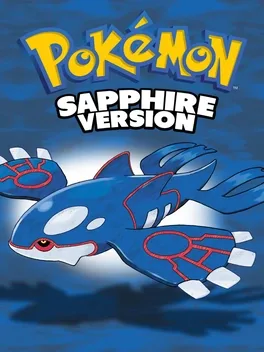
Pokémon Sapphire Version

Pokémon Sapphire Version

Table of Contents

Introduction

When the Game Boy Advance launched, fans eagerly awaited the next evolution of the Pokémon franchise. Pokémon Sapphire Version, released alongside its counterpart Ruby, arrived as the highly anticipated sequel to the legendary Pokémon Gold and Silver Versions from 1999. Known in Japan as Pocket Monsters Sapphire and frequently referred to simply as Pokemon Sapphire, this title transported players to the lush, vibrant region of Hoenn. It was not just a new coat of paint; it was a fundamental shift in how the world of Pokémon functioned, introducing 135 new species and a suite of technical improvements that redefined the series for a new generation of handheld gaming. The game remains a cornerstone of the 32-bit era, offering a depth of experience that moved the franchise into a more modern and story-driven direction.

Story & Setting

The narrative of Pokémon Sapphire Version takes place in the Hoenn region, a sprawling archipelago characterized by its diverse ecosystems, from the smoking heights of Mt. Chimney to the deep underwater trenches surrounding Sootopolis City. Players begin their journey in Littleroot Town, assuming the role of a young trainer moving into the region and receiving their first partner from Professor Birch. Unlike previous titles, the story takes a more cinematic tone. In this version, often localized as Pokémon Saphir in European regions like France and Germany, the primary antagonists are Team Aqua. This criminal organization seeks to expand the world's oceans by awakening the Primal Pokémon Kyogre. The campaign is significantly longer and more story-focused than its predecessors, weaving the legendary Pokémon directly into the overarching plot regarding the environment and the balance of nature.

Gameplay

At its core, the gameplay of Pokémon Sapphire Version introduced mechanics that remain staples of the franchise. The most notable addition was the Double Battle system, where trainers face off using two Pokémon at once, allowing for complex synergies between different moves. This depth was further enhanced by the introduction of Pokémon Abilities and Natures, which gave individual creatures unique traits and stat growths. Whether you were playing Pokémon Zafiro in Spain or Pokémon Zaffiro in Italy, the depth of training became more complex and rewarding for competitive players. For those who preferred showmanship over combat, the game introduced Pokémon Contests, where the "Coolness" or "Beauty" of a move mattered more than its power. With 135 new Pokémon to catch, including the iconic starters Treecko, Torchic, and Mudkip, the game offered immense content for fans, including the Chinese-speaking audience who knew the title as 精灵宝可梦:蓝宝石.

Platforms

This game was released on the Game Boy Advance, representing a significant technical jump for the franchise.

Legacy

The legacy of Pokémon Sapphire Version is monumental. It transitioned the series into the 32-bit era, establishing the "Generation III" framework that served as the foundation for the franchise's competitive scene. While the hardware shift necessitated a clean break from previous titles, the game eventually won over critics with its technical polish and deep gameplay systems. Its success led to the eventual release of the enhanced Emerald version and the full 3D remakes on the Nintendo 3DS, Alpha Sapphire and Omega Ruby. To this day, many fans consider the Hoenn region to be the peak of exploration and environmental variety in the Pokémon series, specifically praising the maritime themes and the sense of adventure found in navigating the vast ocean routes.

Fun Facts

One of the most intriguing aspects of Pokémon Sapphire Version was its use of Braille. To encounter the legendary trio of Regirock, Regice, and Registeel, players had to decipher Braille messages found in hidden underwater chambers—a move intended to encourage community cooperation and research. Another interesting fact is the "Internal Battery" issue; many original cartridges now face a "dry battery" error, which stops time-based events like berry growth but allows the main game to remain playable. Lastly, the incredibly rare "Mirage Island" only appears if a specific random number matches a hidden value of a Pokémon in the player's party, making it one of the most elusive locations in gaming history.

Found 6 item(s) for sale

  • Pokémon Sapphire Version

    Seller: retrogameplace

    Country of origin: Spain

    Status: loose

    Description:

    Uploaded Photo
    Image of
  • Pokémon Sapphire Version

    Seller: retrogameplace

    Country of origin: Spain

    Status: loose

    Description:

    Uploaded Photo
    Image of
  • Pokémon Sapphire Version

    Seller: retrogameplace

    Country of origin: Spain

    Status: loose

    Description:

    Uploaded Photo
    Image of
  • Pokémon Sapphire Version

    Seller: retrogameplace

    Country of origin: Spain

    Status: loose

    Description:

    Uploaded Photo
    Image of
  • Pokémon Sapphire Version

    Seller: retrogameplace

    Country of origin: Spain

    Status: loose

    Description:

    Uploaded Photo
    Image of
  • Pokémon Sapphire Version

    Seller: retrogameplace

    Country of origin: Spain

    Status: loose

    Description:

    Uploaded Photo
    Image of