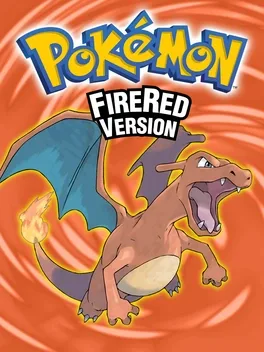
Pokémon FireRed Version
Introduction
Released in 2004, Pokémon FireRed Version stands as a landmark title in the beloved monster-collecting franchise. As the first-ever remakes in the Pokémon series, FireRed and its counterpart LeafGreen transported players back to where it all began: the Kanto region. Whether you knew it as Pokemon FireRed or by its international titles like Pokémon Rosso Fuoco and Pokémon Rojo Fuego, this title redefined how Game Freak approached nostalgia. It blended the classic charm of the 1990s with the technical advancements of the early 2000s, providing a definitive way for a new generation to experience the origins of the series.
Story & Setting
The narrative follows a young protagonist from Pallet Town on a quest to become the ultimate Pokémon Champion. Set in the sprawling Kanto region, the world is filled with iconic locations such as the eerie Lavender Town and the bustling Saffron City. Known in Japan as Pocket Monsters FireRed, the game meticulously recreates the plot of the original 1996 classics. Players must travel across the land to collect eight Gym Badges, defeat the nefarious Team Rocket, and ultimately challenge the Elite Four. A significant addition to this version is the Sevii Islands, a new post-game archipelago that expands the lore and provides a bridge to the Johto and Hoenn regions, offering new challenges and rare encounters.
Gameplay
Gameplay in Pokémon FireRed is a refined version of the classic turn-based RPG formula. While it retains the 151 original creatures, it incorporates the engine and mechanics of Generation III, specifically those introduced in Ruby and Sapphire. This includes the introduction of Pokémon Abilities and Natures, which added a layer of depth to competitive battling. One of the most significant physical additions was the Game Boy Advance Wireless Adapter. This peripheral allowed players to trade and battle without the restriction of cables, a revolutionary step for the handheld era. Whether you refer to it as Pokémon Rouge Feu or Pokémon Feuerrot, the experience remained focused on catching 'em all and mastering the elemental combat system. New quality-of-life features, like the Fame Checker and an in-game help system, made the journey more accessible than ever before.
Pokémon FireRed Version was designed specifically for Nintendo's handheld hardware of the early 2000s, utilizing the system's enhanced color palette and sound capabilities to modernize the Kanto experience.
Legacy
The legacy of Pokémon Fire Red is undeniable. It became the second best-selling game on its platform, trailing only the original Generation III pair. Its massive commercial success proved there was a significant appetite for remakes, setting a precedent that led to future reimaginings like HeartGold, SoulSilver, and beyond. The game received the Nintendo Player's Choice award, signifying its status as a must-play title for handheld enthusiasts. For many fans, it remains the definitive way to experience the Kanto region, offering a perfect balance of old-school difficulty and modern design sensibilities.
Fun Facts
- The game was known by various names globally, including Pokémon Fire Red and Pokémon Feuerrot.
- It was the first time players could play as a female protagonist in Kanto, thanks to the addition of the character Leaf.
- The Wireless Adapter was originally bundled for free with the game to encourage social play, though later copies sold it separately.
- Many of the sprites used for the Pokémon were updated from the Ruby and Sapphire versions to better reflect their original official artwork.
- The game includes a "Help" feature that provides a basic type-effectiveness chart, a first for the series to assist newcomers.