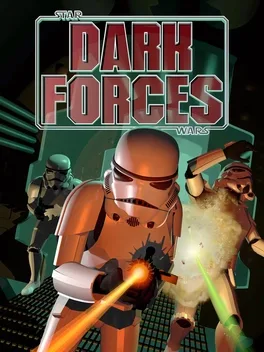
Star Wars: Dark Forces
Introduction
In the mid-1990s, the first-person shooter genre was dominated by what were then called "Doom-clones," but one title emerged to break the mold and transport players to a galaxy far, far away. Star Wars: Dark Forces, often referred to by fans as Dark Forces 1, was more than just a standard shooter; it was a cinematic experience that expanded the Star Wars universe in ways previously unseen in the gaming medium. Developed and published by LucasArts, Star Wars: Dark Forces (Classic) redefined what players expected from the genre by introducing verticality, mission-based objectives, and a compelling narrative centered on a brand-new kind of hero. At a time when most shooters were about mindless blasting, this title brought a sense of adventure and tactical depth that resonated with both fans of the franchise and hardcore gamers.
Story & Setting
The Empire stretches its evil clutches across the galaxy, consuming planets with devastating results. Through many struggles, the Rebel Alliance has learned of a new Imperial battle station, the Death Star, with enough power to destroy an entire planet. The narrative kicks off with Kyle Katarn, a former Imperial Stormtrooper who has become a mercenary for hire. After being recruited by Mon Mothma, Kyle joins the Rebel Alliance's covert operations division to infiltrate Imperial installations.
However, the threat of the Death Star is only the beginning. The evil Empire is secretly building a massive army to complete their arsenal of domination and render their reign of terror unstoppable. This secret project involves the creation of "Dark Troopers"—highly advanced battle droids and armored super-soldiers. Kyle must re-take the Empire from the inside, one battle at a time, traveling to diverse locales such as Star Destroyer interiors, Jabba the Hutt's luxury sail barge, and the vertical cityscapes of Coruscant. Each mission is grounded in the lore, following a specific storyline progressed by cinematic cutscenes.
Gameplay
Unlike many other Doom-based games of the era, Dark Forces 1 attempted a realistic approach to level design and interaction. The game utilized the Jedi Engine, which allowed for features that were revolutionary in 1995. Players could look up and down, jump, and crouch, which added a significant layer of verticality to the combat and exploration. Instead of just searching for an exit, each mission had its own briefing and unique objectives, such as planting thermal detonators, rescuing captives, or retrieving top-secret data.
Levels were designed to represent actual bases, mines, and facilities, making the player feel like they were truly part of the Star Wars universe. Kyle Katarn’s arsenal was equally iconic, featuring the Bryar Pistol, the E-11 blaster rifle, and thermal detonators. The gameplay balanced high-octane firefights with environmental puzzles, requiring players to navigate complex Imperial architecture and solve logic-based challenges to progress through the story.
This game was released on several platforms, including personal computers and home consoles, allowing a wide variety of players to experience Kyle Katarn's first mission.
Legacy
The legacy of Star Wars: Dark Forces (Classic) is monumental. It served as the foundation for the Jedi Knight series, which would eventually see Kyle Katarn become one of the most beloved characters in the Star Wars Expanded Universe. Technically, it pushed the boundaries of what 2.5D engines could achieve, proving that licensed games could be both critically acclaimed and commercially successful. Its influence is still felt today, with the Dark Trooper characters even making the jump from this 1995 classic into modern live-action Star Wars series like The Mandalorian. For many, it remains the gold standard for how to integrate a deep narrative into a first-person shooter.
Fun Facts
- While Kyle Katarn is famous for wielding a lightsaber in later games, he does not use one at all in Dark Forces 1.
- The first mission of the game involves stealing the Death Star plans, a plot point that predates the movie Rogue One by over twenty years.
- The game's sound engine, iMUSE, allowed the music to transition seamlessly based on the intensity of the action on screen.
- It was one of the first FPS games to feature 3D objects (voxels/sprites) that could be viewed from multiple angles within the environment.