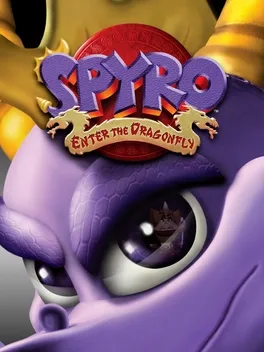
Spyro: Enter the Dragonfly
Introduction
Spyro the Dragon was a cornerstone of the original PlayStation, defined by its vibrant colors and fluid movement. When the sixth generation of consoles arrived, fans eagerly anticipated the mascot's jump to the PlayStation 2 and Nintendo GameCube. Spyro: Enter the Dragonfly was intended to be that triumphant leap. Developed by Check Six Studios and Equinoxe rather than the series creators at Insomniac Games, the title carried the weight of massive expectations. Unfortunately, it became a cautionary tale of rushed production and technical ambition exceeding the developer's grasp. While it aimed to modernize the formula for a new era, it is now remembered as one of the most troubled releases of its time.
Story & Setting
Set shortly after the events of the acclaimed \"Year of the Dragon,\" the narrative begins with a grand celebration. The Dragon Realms are hosting a festival to welcome a new generation of dragonflies, which serve as essential companions for the young dragons. However, the peace is shattered when the villainous Ripto returns, having survived his previous defeat. Attempting to steal the dragonflies to weaken the dragons, Ripto casts a spell that accidentally scatters the insects across various distant worlds. Spyro, accompanied by his faithful companion Sparx, must once again venture out to recover the dragonflies and thwart Ripto’s plans. The game maintains the whimsical tone of the series, though it features a significantly smaller scope than its predecessors.
Gameplay
The core loop remains largely faithful to the \"collect-a-thon\" style established in the 32-bit era. Spyro retains his signature abilities: he can charge at enemies, glide across vast chasms, and use his breath to dispatch foes. However, Enter the Dragonfly introduces multiple breath types to add depth to puzzles. In addition to his standard flame, Spyro can acquire Bubble Breath to capture dragonflies, Electric Breath to power machinery, and Ice Breath to freeze platforms or enemies. The game also features several vehicle-based challenges to break up the platforming. Hunter the Cheetah returns with his Manta Ray and UFO sections, while new additions like the tank and the Spitfire attack plane offer varied combat sequences. Despite these mechanics, the experience is frequently interrupted by performance issues and unpolished physics.
This game was released on several platforms, including the PlayStation 2 and the Nintendo GameCube.
Legacy
The legacy of Spyro: Enter the Dragonfly is unfortunately defined by its technical shortcomings. The game is notorious for being poorly made due to a grueling development cycle that saw it rushed to meet holiday deadlines. Players were met with abysmal framerates that often dipped into the low teens, agonizingly long loading times, and a plethora of game-breaking glitches. Critics and fans alike lambasted the title upon release, frequently calling it the worst entry in the franchise. It marked the beginning of a turbulent period for the series as it moved through various developers. For many, it remains a \"what if\" scenario—a project with the potential to be a next-gen masterpiece that fell victim to management and scheduling pressures. Notably, the game does not have any alternative names, having been released globally under its primary title.
Fun Facts
Despite its difficult reception, the game has several interesting pieces of trivia. This was the final time Tom Kenny, the iconic voice of SpongeBob SquarePants, voiced Spyro until the release of the Reignited Trilogy in 2018. The game was originally intended to feature over 100 levels and multiple boss encounters, including the return of Gnasty Gnorc, but the majority of this content was cut to meet the 2002 release window. Additionally, modern speedrunners have found a unique appreciation for the game; its numerous glitches and technical oversights allow for creative and broken ways to bypass entire sections of the world, making it a fascinating, if unintended, playground for sequence breaking.