Found 2 item(s) for sale
-
Games
Send a Message to
-
Games
Send a Message to
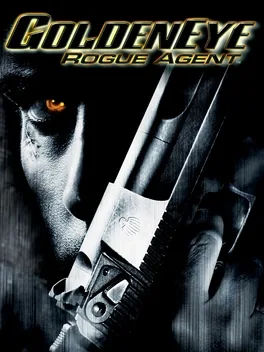
In the mid-2000s, Electronic Arts held the keys to the James Bond video game kingdom. While most titles focused on the suave heroism of 007, GoldenEye: Rogue Agent took a daring detour into the darker side of the espionage world. Released in 2004, this first-person shooter invited players to stop being the hero and start being the villain. Known in some regions by its alternative name GoldenEye : Au service du mal, the game attempted to trade on the legendary "GoldenEye" brand while carving out a completely unique narrative path that had little to do with the films of the same name. It was a bold experiment in a franchise usually defined by its rigid adherence to the cinematic formula, offering a fresh perspective on a familiar universe from the eyes of a disgraced operative.
The narrative follows Jack Hunter, a former MI6 agent whose career comes to a crashing halt after he is dismissed for "excessive brutality" during a training exercise involving the villainous Dr. No. This dismissal doesn't go unnoticed; Hunter is soon recruited by the legendary Auric Goldfinger. Goldfinger is a high-ranking member of a shadowy, powerful criminal syndicate that bears a striking resemblance to Ian Fleming's SPECTRE. Hunter is tasked with a singular mission: eliminate Goldfinger’s arch-rival, Dr. No. Throughout the campaign, the game serves as a "who's who" of the Bond villain gallery. Players cross paths with iconic characters like Pussy Galore, the hat-throwing Oddjob, the lethal Xenia Onatopp, and the master assassin Francisco Scaramanga. The story is a celebration of Bond's rogues, placing the player at the center of a massive underworld turf war where loyalty is scarce and power is everything.
The gameplay of GoldenEye: Rogue Agent was built around a high-octane, dual-wielding combat system. Unlike many shooters of the era, the game allowed players to independently map weapons to the left and right triggers, facilitating diverse tactical combinations. However, the true star of the show was the protagonist's cybernetic eye. After losing his natural eye in the prologue, Hunter is outfitted by Scaramanga with a gold-colored replacement, which gives him his titular moniker. This "GoldenEye" provides four distinct upgrades unlocked throughout the game: MRI vision to see through walls, EM Hack to disable electronic devices, Polarity Shield to deflect bullets, and Induced Malice, a telekinetic-like ability to toss enemies. To use these abilities, players must manage an "E.V.I.L." energy meter, which is replenished by performing villainous acts, such as using environmental hazards or taking hostages as human shields.
This game was released on the major home consoles of its generation, bringing its villain-centric action to fans of various hardware including the PlayStation 2, Xbox, and Nintendo GameCube.
GoldenEye: Rogue Agent occupies a complicated space in gaming history. At the time of its release, it faced significant criticism for its marketing, which many felt intentionally misled fans into thinking it was a direct sequel to the 1997 Nintendo 64 masterpiece. Despite this, the game was a commercial success and is remembered for its innovative dual-wielding system and the novelty of playing as a bad guy. It represented an era where Electronic Arts was willing to take massive creative risks with the Bond license, moving away from movie tie-ins to explore original scenarios within the broader mythology. While it may not have reached the heights of its namesake, it remains a cult classic for those who enjoyed the chance to step into the shoes of an anti-hero.
Despite the name, the game has no narrative connection to the 1995 film GoldenEye or the 1997 video game developed by Rare. The game features the voices and likenesses of legendary actors, including Christopher Lee reprising his role as Francisco Scaramanga and Judi Dench returning as M. Additionally, the multiplayer mode allowed players to battle across maps inspired by classic Bond locations, such as the Funhouse and the Moonraker launch site. Interestingly, the concept of a "rogue agent" has since become a popular trope in Bond media, but this game was one of the first to build an entire experience around the idea of a disgraced MI6 operative working for the highest bidder.
Games
Games