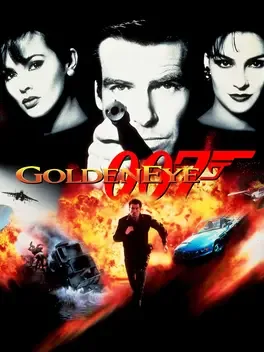
GoldenEye 007
Introduction
When discussing the most influential titles in the history of first-person shooters, one cannot ignore the seismic impact of GoldenEye 007. Released for the Nintendo 64 and often referred to by its title screen name 007 GoldenEye, this title shattered the perception that shooters were exclusively for the PC market. Developed by Rare, it successfully translated the high-stakes world of international espionage into a digital experience that remains a touchstone for millions of gamers. At its core, it combined a cinematic single-player experience with a local multiplayer component that would define friendship rivalries for an entire generation. It proved that movie-licensed games could achieve critical greatness and technical innovation simultaneously.
Story & Setting
Faithfully adapting the 1995 film of the same name, the game follows James Bond on a globe-trotting mission to stop a criminal syndicate known as Janus. The narrative begins at a chemical weapons facility in Arkhangelsk, USSR, and spans iconic locations including the snowy wastes of Severnaya, the streets of St. Petersburg, and a hidden jungle base in Cuba. As Bond, players investigate the theft of the GoldenEye satellite system, a devastating electromagnetic pulse weapon that threatens global security. The story is told through mission briefings and in-game cinematics, featuring classic characters like Natalya Simonova and the treacherous Alec Trevelyan, also known as 006. The level design captures the essence of the Pierce Brosnan era effectively.
Gameplay
The gameplay of GoldenEye 007 was revolutionary for its time, moving away from the "run and gun" style of its predecessors toward a more tactical, objective-based approach. The single-player campaign consists of 20 missions, where difficulty levels—Agent, Secret Agent, and 00 Agent—do more than just increase enemy health; they add more complex objectives to each level. This forced players to explore every corner of the map. Stealth is a viable strategy, as Bond can use silenced weapons or his bare hands to dispatch guards before they raise alarms. The Q-Watch serves as a central hub for gadgets, including a laser and a magnetic polarizer, allowing for varied interaction with the environment.
Beyond the campaign, the game is perhaps most famous for its local split-screen multiplayer. Supporting up to four players, it offers various competitive scenarios such as deathmatch and team modes like "You Only Live Twice" and "The Living Daylights." Players can choose from a roster of James Bond characters, each with unique attributes, turning living rooms into intense battlefields. The multiplayer component became widely recognized for its influence on console FPS design and is considered a landmark feature of the game, proving that the Nintendo 64 was the ultimate machine for social gaming in the late nineties.
The game was originally developed and released as an exclusive title to showcase the hardware capabilities of the Nintendo 64.
Legacy
The legacy of GoldenEye 007 is immense. It proved that complex, objective-driven first-person shooters could find a massive audience on consoles, which were previously dominated by platformers and RPGs. It won numerous awards, including the BAFTA Interactive Entertainment Award, and became one of the best-selling games on the Nintendo 64. Modern shooters owe a debt to the hit-location damage and mission structure introduced here. Even decades later, it is frequently cited in "Greatest Games of All Time" lists and remains a benchmark for how to handle a licensed property correctly.
Fun Facts
- The Multiplayer Afterthought: Incredibly, the legendary four-player multiplayer mode was added by a single developer at the very end of the development cycle and was not part of the original project plan.
- The "Oddjob" Rule: Playing as Oddjob is widely considered "cheating" in the community because his shorter character model makes him harder to hit, leading many players to ban the character in house rules.
- The Klobb: The semi-automatic weapon known as the "Klobb" was named after Ken Lobb, a Nintendo producer who assisted Rare during development.
- Inexperienced Team: Despite its massive success, the core development team at Rare consisted of only about ten people, many of whom had never worked on a video game before.