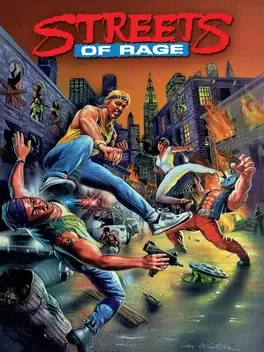
Streets of Rage
Introduction
In the early 1990s, the video game industry was witnessing a fierce battle for dominance in the home console market. While competitors had their own brawlers, Sega needed a definitive answer to the side-scrolling beat 'em up craze. In 1991, they unleashed a title that would become an instant classic: Streets of Rage. Known in Japan as Bare Knuckle, or more formally as Bare Knuckle: Ikari no Tekken, this title redefined what players expected from urban combat games. Often referred to by fans simply as SoR, the game successfully captured the gritty, neon-soaked atmosphere of early 90s action cinema. Its combination of tight controls, a legendary soundtrack, and cooperative multiplayer action made it a centerpiece of the Sega Mega Drive and Genesis library, setting the stage for one of the most beloved trilogies in gaming history.
Story & Setting
The narrative of Streets of Rage takes place in a once-peaceful city that has fallen under the shadow of a powerful criminal syndicate. This organization, led by the mysterious and ruthless Mr. X, has corrupted the local government and even the police force, leaving the citizens in a state of terror. With the law unable or unwilling to intervene, three young former police officers—Axel Stone, Adam Hunter, and Blaze Fielding—decide to take the law into their own hands. In the Japanese version, Bare Knuckle: Ikari no Tekken (meaning "Furious Iron Fist"), the stakes are just as high. These three vigilantes navigate through eight perilous locations, ranging from rain-slicked city streets and beachside boardwalks to a high-stakes freighter and eventually the syndicate's headquarters. Their goal is simple but dangerous: dismantle the syndicate from the bottom up and take down Mr. X once and for all.
Gameplay
The gameplay of Streets of Rage is a masterclass in side-scrolling combat. Players choose one of the three protagonists, each possessing unique attributes. Axel is the balanced fighter, Adam provides heavy-hitting power, and Blaze offers superior speed and agility. Unlike some other brawlers of the era, the game emphasizes tactical positioning and the use of the environment. Players can pick up various weapons dropped by enemies or found in breakable objects, such as lead pipes, knives, and glass bottles. A standout mechanic in this first installment is the "Special" attack button. Instead of a personal power-up, calling for backup summons a police car that fires a screen-clearing incendiary shell or a Gatling gun barrage to assist the players. This mechanic adds a layer of strategy, as the backup is limited and must be used wisely against bosses or overwhelming waves of thugs.
This game was released on several platforms, including the Sega Mega Drive/Genesis, Game Gear, Master System, and was later ported to modern consoles and mobile devices.
Legacy
The legacy of Streets of Rage is inextricably linked to its incredible presentation and cultural impact. Most notably, the soundtrack composed by Yuzo Koshiro is cited as one of the greatest in gaming history. By blending elements of house, techno, and breakbeat, Koshiro created an urban soundscape that pushed the Genesis's sound chip to its absolute limits. Beyond the music, the game established a blueprint for the series that would be refined in the critically acclaimed Streets of Rage 2 and 3. The franchise remained a dormant but cherished memory for decades until the eventual release of a fourth installment, proving that the appetite for the Bare Knuckle style of gameplay never truly faded. It remains a high-water mark for the 16-bit era and a testament to Sega's creative peak.
Fun Facts
There are several fascinating tidbits regarding the development and release of the game. For instance, the early working title for the project was Bare Knuckle: Furious Iron Fist, which eventually became the subtitle for the Japanese release. Another interesting fact is that the game features two different endings; if two players reach the final boss, Mr. X offers them a choice to join his syndicate. If one player accepts and the other refuses, they must fight to the death, leading to a unique ending where the winner becomes the new leader of the crime organization. Additionally, despite its gritty urban American aesthetic, the game was developed entirely by a Japanese team at Sega who drew inspiration from American action movies of the 1980s. Finally, the character of Adam Hunter was notably absent from the playable roster in the immediate sequels, only returning as a playable character decades later in Streets of Rage 4.