Found 5 item(s) for sale
-
Games
Send a Message to
-
Games
Send a Message to
-
Games
Send a Message to
-
Games
Send a Message to
-
Games
Send a Message to
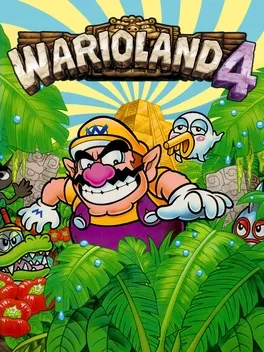
"Wario's back for more... and more... and MORE!" Wario Land 4 represents a masterclass in handheld game design, successfully transitioning the series from the monochrome roots of the original Game Boy into the vivid, 32-bit era of the Game Boy Advance. Released in 2001, it isn't just a standard platformer; it is a vibrant, weird, and unapologetically greedy adventure. Known in different regions as Wario Land Advance: Yooki no Otakara, Wario Land Advance, or by its Chinese title 琶力敀寻宝记, this title redefined what a handheld platformer could be by prioritizing personality and clever environmental puzzles over traditional speed.
The narrative of Wario Land 4 is driven entirely by Wario’s obsession with wealth. After reading a newspaper article about a legendary Golden Pyramid buried deep within a jungle, Wario doesn't hesitate. He hops into his signature Wario Car and speeds toward the site, hoping to claim the treasure of the Golden Diva for himself. The pyramid serves as a massive hub, containing four distinct passages: the Emerald, Topaz, Ruby, and Sapphire Passages. Each world features a unique theme, ranging from lush nature and mechanical nightmares to toy-filled wonderlands and horrifying mansions. As Wario delves deeper, he must confront bizarre guardians and unravel the mystery of the cursed Princess Shokora, though his primary motivation remains the gleaming piles of gold and the legendary Pyramid of Gold.
The gameplay of Wario Land 4 introduced significant changes to the established formula. For the first time since the original Wario Land, Wario is no longer immortal. He now possesses a health bar, meaning players must be cautious of enemies and environmental hazards. However, Wario’s physical prowess is greater than ever. He can dash, smash, and perform a powerful ground pound. The transformation mechanic returns, where certain enemy attacks turn Wario into different forms—such as a Zombie, a ball of fire, or a puffy, floating head—to solve specific puzzles.
Each level follows a "search and escape" structure. Players must explore to find four jewel pieces and a ghostly entity called a Keyzer to unlock the boss of each passage. The climax of every stage occurs when Wario hits a "Frog Switch," which triggers a self-destruct sequence. Players must then race back to the entrance portal before the timer expires. If the timer hits zero, Wario starts losing his hard-earned coins, and eventually, the player fails the level. This mechanic adds a layer of high-stakes tension that balances the slower-paced exploration of the first half of each stage.
This game was released on several platforms, providing multiple ways for players to experience Wario’s greed-filled adventure through various console generations.
The legacy of Wario Land 4 is defined by its incredible pixel art and avant-garde soundtrack. The game’s visuals pushed the Game Boy Advance to its limits, featuring fluid animations and a vibrant color palette that gave the world a unique, surrealist look. Its influence is profoundly felt in modern indie titles, most notably Pizza Tower, which draws heavily from the escape mechanics and character animation styles found here. It remains a pinnacle of the 2D platforming genre, celebrated for its creative level design, bizarre boss encounters, and the sheer charisma of its anti-hero protagonist. It proved that Wario could carry a flagship title without relying on the Mario name.
Games
Games
Games
Games
Games