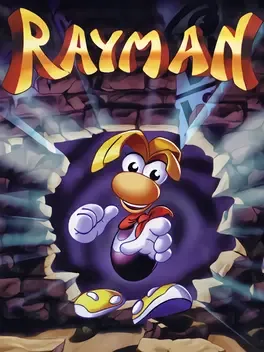
Rayman
Introduction
In the mid-1990s, the gaming world was shifting rapidly toward three-dimensional graphics, but one title proved that the artistry of 2D platforming still had incredible heights to reach. That game was Rayman, a vibrant and challenging adventure that introduced the world to one of the most unique mascots in video game history. Developed by Ubisoft and led by the visionary Michel Ancel, the game first appeared on the Atari Jaguar before finding its most famous footing on other systems. Whether players recognize it as Rayman PlayStation or Rayman Saturn, the impact of this limbless hero was immediate. Its lush visuals, distinct character design, and punishing difficulty made it a standout title that redefined what a platformer could look like at the peak of the 32-bit era.
Story & Setting
The world of Rayman is a surreal, dreamlike landscape known as the Glade of Dreams. Peace in this world is maintained by a mystical orb called the Great Protoon, which is surrounded by small, joyful creatures known as Electoons. However, the balance is shattered when the villainous Mr. Dark steals the Great Protoon and defeats Betilla the Fairy. This causes the Electoons to be scattered and caged across the land. Rayman, the big-nosed chap with no arms or legs, is the only one who can restore order. He journeys through diverse environments like Band Land and the Dream Forest to save his friends. In different regions, the title gained massive popularity, known to many fans in the East as 雷曼.
Gameplay
At its core, Rayman is a side-scrolling platformer, but it distinguishes itself through creative mechanics and gradual ability progression. Initially, Rayman starts with basic movements, but Betilla the Fairy grants him new powers as he progresses. One of his most iconic moves is the ability to use his hair like helicopter blades to hover for a short period, allowing for precise landings. For combat, Rayman can throw his telescopic fists at enemies. Players can tap the button for a quick strike or wind up his fists for a more powerful punch that travels further. The level design often demands extreme precision, making it one of the most difficult games of its era. Players can also find special power-ups that grant Rayman unlimited flying power, which is essential for navigating through some of the game's more intricate and maze-like stages.
This game was released on several platforms, including the original PlayStation, the Sega Saturn, and later digitally on modern storefronts for handheld play.
Legacy
The legacy of Rayman is one of enduring quality and artistic innovation. While many 2D mascots faded away during the transition to 3D, Rayman adapted, eventually starring in acclaimed 3D sequels and later returning to his 2D roots with Rayman Origins and Legends. The original game's hand-drawn art style was years ahead of its time, featuring fluid animations that felt like a playable cartoon. It paved the way for numerous spin-offs, including the wildly successful Raving Rabbids series. Even decades later, fans still revisit the original for its charm and the immense satisfaction of overcoming its toughest levels. It remains a benchmark for aesthetic design in the platforming genre.
Fun Facts
Did you know that Rayman has no limbs because of technical limitations? During development, the team struggled with the complexity of animating limbs correctly on the hardware of the time, so Michel Ancel decided to remove the arms, legs, and neck entirely. This gave Rayman his iconic look where his hands, feet, and head simply float around his torso. Additionally, while the game is known for its whimsical music, it actually features different soundtracks depending on the version you play; the CD-based versions utilized high-quality redbook audio that became a hallmark of the Rayman experience and helped set it apart from other 16-bit and 32-bit competitors.