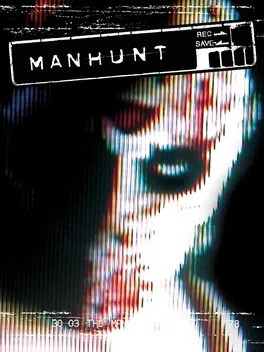
Manhunt
Table of Contents
Introduction
In the landscape of early 2000s gaming, few titles provoked as much raw, visceral reaction as Rockstar Games’ Manhunt. While the studio was already famous—or infamous—for the Grand Theft Auto series, Manhunt took the concept of transgressive media to a completely different level. It is not just a game about violence; it is a game about the voyeuristic nature of violence and the desensitization of the audience. This third-person stealth horror title stripped away the satirical humor of its contemporaries, leaving behind a cold, gritty, and deeply unsettling experience that forced players to become the predator in a city-wide snuff film. It remains one of the most atmospheric and harrowing titles in the Rockstar catalog.
Story & Setting
The narrative of Manhunt follows James Earl Cash, a death row inmate who is seemingly executed by lethal injection. However, Cash wakes up to find he has been drugged and "purchased" by Lionel Starkweather, a disgraced former Hollywood director now operating in the shadows of Carcer City. Starkweather, known as "The Director," has wired the city with cameras to record a series of high-stakes snuff films. Cash is forced to navigate the decaying, urban hellscape of Carcer City, surviving various "scenes" while being hunted by psychotic gangs. The atmosphere is oppressive, characterized by grainy filters, industrial decay, and a constant sense of being watched. There are no alternative names for this title; it is known globally by the singular, chilling title of Manhunt.
Gameplay
The core loop of Manhunt is built around the tension of the hunt. The game consists of twenty primary levels, referred to as "scenes," along with four unlockable bonus levels. Unlike traditional action games, Manhunt discourages direct confrontation. Players must utilize "dark spots" and shadows scattered throughout the locales to remain invisible to "Hunters"—the various gang members tasked with Cash's demise. Hiding in these dark areas makes the player invisible to opponents, allowing them to wait for the perfect moment to strike.
The primary method of progression is the stealth execution. By sneaking up on an enemy, players can perform kills that are categorized into three levels of brutality: Hasty (White), Violent (Yellow), and Gruesome (Red). The longer a player stalks their prey, the more horrific the cinematic execution becomes. At the end of each scene, the player is rated on a scale of one to five stars. This rating is determined by the speed of completion and the level of brutality displayed during kills. This system directly encourages players to play as viscerally as possible to achieve a five-star performance, turning survival into a twisted form of performance art for the Director's cameras.
This game was released across several major platforms during its initial run and has since been made available on modern hardware through various digital storefronts and backwards compatibility programs.
Legacy
Manhunt remains one of the most controversial video games ever made. Upon its release, it was condemned by various media outlets and political figures for its depiction of graphic violence. It was banned or refused classification in several countries, including New Zealand and Australia, and became a central talking point in the debate over the psychological effects of violent media. Despite the outcry, or perhaps because of it, the game developed a massive cult following. Critics praised its oppressive atmosphere and tight stealth mechanics, noting that it successfully made the player feel genuinely uncomfortable. It eventually spawned a sequel, Manhunt 2, which faced even stricter censorship challenges.
Fun Facts
- The voice of "The Director," Lionel Starkweather, was provided by veteran actor Brian Cox, known for his roles in Succession and the Bourne film franchise.
- On the PlayStation 2 and Xbox versions, players could plug in a USB headset to use their actual voice to lure Hunters. Making a noise in real life would attract the attention of enemies in the game.
- Carcer City, the setting of the game, is frequently referenced in other Rockstar titles, including Grand Theft Auto, as a neighboring city to Liberty City.
- The game’s grainy, "security camera" visual style was specifically designed to mimic the look of low-budget snuff tapes.