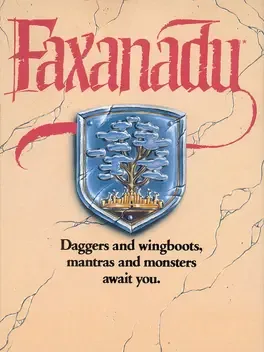
Faxanadu

Faxanadu\n\n Introduction\n Story & Setting\n Gameplay\n Platforms\n Legacy\n Fun Facts\n\n## Introduction\n\nFaxanadu stands as a unique and atmospheric jewel in the library of the Nintendo Entertainment System. Originally released for the Famicom in Japan in 1987 and later brought to the international market by Nintendo in 1990, the game represents a fascinating bridge between traditional side-scrolling action and deep role-playing mechanics. Developed as a spin-off of the legendary Xanadu—the second entry in Falcom’s massive Dragon Slayer series—Faxanadu manages to carve out its own identity while maintaining its prestigious lineage. With its melancholic art style, haunting soundtrack, and challenging combat, it remains a standout title for fans of 8-bit adventure games.\n\n## Story & Setting\n\nIn Faxanadu, players take on the role of an unnamed protagonist, an adventurer returning to his home town of Eolis after years of wandering. Upon arrival, he finds the settlement in a state of decay. The water has stopped flowing, the once-majestic World Tree is dying, and the Elven people are under constant siege from the Dwarves, who have been transformed into hideous monsters by an ancient, malevolent force. \n\nThe game is set entirely within and around the massive World Tree, a vertical landscape that serves as the backdrop for the entire journey. As the hero, you must ascend the tree, navigating through various branches, roots, and interior towns to seek out the source of the corruption. The narrative is heavy with themes of environmental collapse and the struggle between two ancient races, providing a much darker and more mature tone than many other NES titles of the era. This atmosphere is further enhanced by the game's distinct earthy color palette and medieval aesthetic.\n\n## Gameplay\n\nFaxanadu is a side-scrolling action-RPG that emphasizes both exploration and character growth. At its core, the gameplay involves navigating complex platforming environments while engaging in real-time combat with a variety of enemies. Players can equip a range of weaponry, including daggers, swords, and longswords, as well as several types of magical projectiles. \n\nThe RPG elements are significant; players must visit towns to rest at hospitals, buy equipment at shops, and speak with the King to receive "Mantras." These Mantras serve as a password system, allowing players to save their progress and return with their current rank and items. The ranking system acts as the game's experience mechanic; as you defeat enemies and gain gold, you can be promoted to higher ranks, which determines the amount of gold you start with after a game-over. Effective inventory management is crucial, as players must balance carrying curative items, keys for locked doors, and powerful offensive magic. The difficulty is notable, requiring precise jumps and careful timing during boss encounters.\n\n## Platforms\n\nThis game was released on several platforms, including the original Famicom in Japan and the Nintendo Entertainment System in North America and Europe. In later years, it found a new audience through digital distribution services.\n\n \n\n## Legacy\n\nFaxanadu is often cited as a prime example of the "Metroidvania" precursor style, alongside titles like Zelda II: The Adventure of Link and Castlevania II: Simon's Quest. While it didn't achieve the same level of mainstream fame as those franchises, it has maintained a dedicated cult following. Critics often praise the game for its sophisticated level design and its ability to create a sense of scale within the hardware limitations of the NES. Its connection to the Dragon Slayer series also cements its place in history as part of the lineage that helped define the Japanese RPG genre. Even today, its influence can be felt in modern indie titles that prioritize atmosphere and challenging, side-scrolling RPG mechanics.\n\n## Fun Facts\n\n The title "Faxanadu" is actually a portmanteau of "Famicom" and "Xanadu," reflecting its origin as a home console version of the PC classic. \n In Japan, the game is known by its Katakana title, ファザナドゥ.\n Unlike many NES games of the time that used bright, primary colors, Faxanadu utilized a palette of browns, greens, and greys to give the World Tree a more organic and weathered feel.\n The North American version of the game features a slightly different translation and some minor graphical adjustments compared to the original Famicom release.\n* The game's soundtrack, composed by Jun Chiki Chikuma, is widely regarded as one of the best on the system, perfectly capturing the eerie and lonely vibe of the World Tree.

Found 1 item(s) for sale

  • Faxanadu

    Seller: retrogameplace

    Country of origin: Spain

    Status: loose

    Description:

    Uploaded Photo
    Image of