Found 4 item(s) for sale
-
Games
Send a Message to
-
Games
Send a Message to
-
Send a Message to
-
Games
Send a Message to
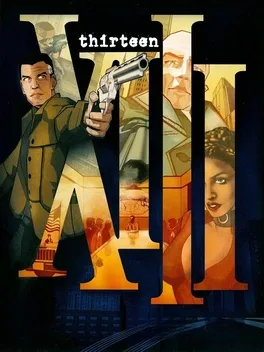
Released in 2003, XIII (often referred to as Thirteen) arrived on the scene as a breath of fresh air in an era increasingly dominated by shooters striving for gritty realism. Developed by Ubisoft, this title opted for a bold, cel-shaded aesthetic that sought to replicate the experience of playing through a graphic novel. Based on the acclaimed Belgian cult comic series created by Jean Van Hamme and William Vance, the game remains one of the most visually distinct entries in the genre. Its commitment to its source material is evident in every frame, blending high-stakes espionage with a unique artistic flair that has allowed the visuals to age far better than many of its 3D-rendered contemporaries. It stands as a testament to the power of stylistic art over raw technical power.
The narrative of XIII is loosely based on the first five volumes of the original comic series, plunging players into a dense web of political intrigue and paranoia. You take on the role of a man who washes up on a beach with no memory of his past, possessing only a mysterious "XIII" tattoo on his collarbone and a key to a bank deposit box. Soon, you discover you are the prime suspect in the assassination of the President of the United States. The setting is a tense, 1970s-style thriller environment where nobody can be trusted. As you unravel the mystery, you must confront a shadowy organization known as the Mongoose and identify the twenty members of the conspiracy who are trying to reshape the American government from the shadows through violence and manipulation.
At its core, XIII is a first-person shooter that expertly balances stealthy infiltration with explosive action. One of its most defining gameplay features is the literal translation of comic book tropes into the 3D environment. Visualized sound effects, such as "BAM" for explosions or "TAP TAP TAP" for footsteps, appear as text on the screen, providing both atmosphere and tactical information. When a player performs a successful headshot or a long-distance sniper kill, the action is often punctuated by a series of three-panel still images showing the impact from different angles, making every kill feel like a frame from a comic.
Aside from these stylistic flourishes, the game features more than fifteen weapons, ranging from standard pistols and shotguns to tactical crossbows and rifles. Interaction with the environment is key; players can pick up chairs, bottles, or even use enemies as human shields. As the story progresses, you unlock specific skills that enhance your capabilities, such as silent walking, lockpicking, and the ability to dual-wield certain firearms. This progression system adds depth to the mission structures, which vary from quiet laboratory break-ins to full-scale assaults on military bases, allowing for multiple approaches to different objectives.
This game was released on several platforms, including the Xbox, PlayStation 2, and Nintendo GameCube.
While XIII did not achieve massive commercial success upon its initial release, it quickly garnered a devoted cult following. Today, it is frequently referred to as XIII - Classic in modern storefronts to differentiate it from more recent remakes. The game is celebrated for its artistic bravery and is often cited as a prime example of how cel-shading can be used to give a game a timeless quality. Its influence can be seen in later titles that experimented with non-photorealistic rendering and narrative-driven FPS mechanics. The cliffhanger ending of the game remains a point of discussion among fans, as it left many questions from the original comic lore unanswered in the digital medium, leaving players wanting more.
One of the most notable aspects of the game's production is its celebrity voice cast. The protagonist was voiced by David Duchovny, famous for his role in The X-Files, which perfectly complemented the game's conspiracy-laden atmosphere. Additionally, the legendary Adam West provided the voice for General Carrington. Another interesting detail is the game's use of "sixth sense" indicators, where stylized visual cues appear on screen to help players track the movement of enemies through walls based on the sounds they make, further leaning into the unique logic of comic book storytelling where sound is always seen.
Games
Games
Games