Found 1 item(s) for sale
-
Games
Send a Message to
Introduction Story & Setting Gameplay Platforms Legacy Fun Facts
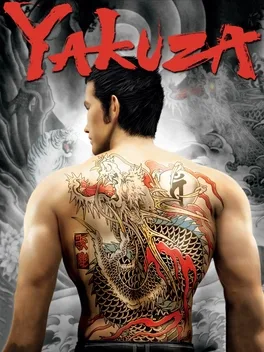
In 2005, Sega released a title that would eventually grow into a global phenomenon, though its beginnings were quite humble outside of Japan. Developed under the internal working title Project J, the game was released in its home territory as Ryuu ga Gotoku and later brought to Western audiences as Yakuza. This cinematic action-adventure game broke the mold of contemporary open-world games by focusing on a hyper-dense, culturally rich recreation of Tokyo’s red-light district. Rather than giving players a massive, empty map, it offered a vibrant, living city filled with danger, humor, and a gripping narrative about honor and redemption. Now widely recognized as the start of the Like A Dragon series, this original entry laid the groundwork for everything that followed.
The narrative of Yakuza is a quintessential crime drama centered on Kazuma Kiryu, known as the "Dragon of Dojima." The story begins with a sacrifice: Kiryu takes the blame for a murder committed by his sworn brother, Nishikiyama, to protect his childhood friend, Yumi. After serving a ten-year prison sentence, Kiryu returns to the streets of Kamurocho to find himself a pariah in a world that has moved on. The Tojo Clan is in turmoil following the disappearance of 10 billion yen from their vaults, an event that has triggered a bloody power struggle among the various families.
Amidst this chaos, Kiryu encounters a mysterious young girl named Haruka who is searching for her mother. Haruka appears to be the key to the missing billions and the target of every criminal organization in the city. The setting of Kamurocho is a fictionalized version of Shinjuku’s Kabukicho, a neon-soaked labyrinth of bars, restaurants, and alleyways. Kiryu must protect Haruka and navigate this lawless world to uncover the truth behind the missing money and the betrayal of those he once called family.
Gameplay in the original Yakuza is a unique blend of 3D brawling, exploration, and role-playing elements. Combat occurs in real-time when Kiryu encounters thugs or rival yakuza on the streets. The combat system emphasizes environmental awareness, allowing players to pick up bicycles, traffic cones, or signage to use as weapons. As players land hits, Kiryu builds up a "Heat Gauge," which can be expended to perform devastating and cinematic Heat Actions. These finishers change based on the environment and the weapons equipped, making every fight feel distinct and brutal.
Beyond the fighting, the game is packed with RPG-style progression and side activities. Players can gain experience to upgrade Kiryu’s health and combat techniques. Kamurocho is filled with distraction, from gambling dens and batting cages to club SEGA arcades where players can play classic minigames. Furthermore, the game introduced the concept of "Substories"—short, often eccentric side missions that humanize Kiryu and provide a lighter tone compared to the heavy, serious main plot.
This game was released on several platforms, including the original release on the PlayStation 2 which spanned multiple regions.
The legacy of Yakuza is one of persistence and eventual triumph. While the first game was a massive hit in Japan, it took years for the series to find its footing in the West. Its success eventually led to the development of numerous sequels, prequels, and spin-offs. The franchise has recently seen a global rebranding to Like A Dragon, aligning with its original Japanese title. The first game was eventually given a full ground-up remake titled Yakuza Kiwami, which brought the 2005 story into a modern engine. However, the original PS2 title remains a landmark for its daring adult-oriented storytelling and its uncompromising portrayal of Japanese urban life.
Games