Found 1 item(s) for sale
-
Games
Send a Message to
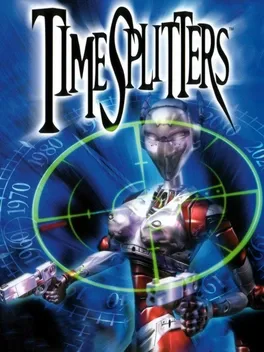
When the PlayStation 2 launched at the turn of the millennium, players were looking for a title that could showcase the power of the new hardware while delivering high-octane action. Enter TimeSplitters, a first-person shooter that redefined console gaming speed and fluidity. Developed by Free Radical Design, a team famously composed of several former Rare employees who worked on the legendary GoldenEye 007, this game arrived as the first entry in what would become a beloved trilogy. Often referred to by fans simply as TS, the game prioritized pure, unadulterated fun and frantic pacing over the burgeoning trend of cinematic realism. It was a bold statement in the FPS genre, offering a stylistic alternative to the slower, more tactical shooters of the time, and it quickly established itself as a must-have title for early adopters of the sixth generation of consoles.
The narrative of TimeSplitters is unique in its structure, focusing more on the concept of time travel and thematic variety than a single, linear protagonist’s journey. The central antagonists are the TimeSplitters themselves, an evil race of creatures from outside of time who seek to disrupt human history. The game takes players on a whirlwind tour through nine different time periods spanning from 1935 to 2020. Each level presents a specific era, such as a spooky tomb in the 1930s, a chemical plant in the 2000s, or a futuristic space station. In each mission, players must recover a specific item and return it to a time portal while fending off waves of era-appropriate enemies and the titular monsters. While the story mode is lighter on dialogue than its successors, the environmental storytelling and the sheer variety of locales provided a sense of grand adventure that kept players engaged through the centuries.
The core of the TimeSplitters experience lies in its exceptionally fast gameplay and robust multiplayer options. The Arcade mode is the heart of the title, supporting up to four players in split-screen or up to ten computer-controlled bots to ensure the maps are always filled with action. There are six distinct multiplayer modes, including classic Deathmatch and Team Deathmatch, alongside more objective-based challenges. Players have deep control over their matches, with the ability to manage weapons, levels, and character rosters.
One of the most innovative features is the MapMaker, a comprehensive level editor. This tool allows players to construct their own arenas using a grid of various pre-made tiles. Beyond just layout, creators can adjust light settings for individual tiles and strategically place items and weapons throughout the map. This level of customization was almost unheard of on consoles at the time and significantly extended the game's lifespan. Whether engaging in the single-player missions or competing in a custom-built arena, the game’s smooth 60-frames-per-second performance ensured a responsive and satisfying experience.
This game was originally released as a flagship title for the PlayStation 2, serving as a primary showcase for the console's early capabilities across various regions.
TimeSplitters left an indelible mark on the first-person shooter landscape. By bringing the arcade-style sensibilities of the N64 era to the more powerful PlayStation 2, Free Radical Design proved that fast-paced, high-framerat shooters had a massive audience on consoles. Its influence can be seen in the way it prioritized split-screen social play and user-generated content long before those features became industry standards. The game's success paved the way for two sequels, TimeSplitters 2 and TimeSplitters: Future Perfect, which expanded on the lore and refined the mechanics established here. Even decades later, TS is remembered fondly for its quirky character designs, its sense of humor, and its commitment to providing a pure gameplay loop that eschewed the self-seriousness of contemporary military shooters.
Did you know that many of the sound effects and the general 'feel' of the movement in TimeSplitters are reminiscent of GoldenEye 007? This is because the core development team was instrumental in creating the N64 classic. Additionally, the game features a staggering roster of over 60 playable characters, ranging from serious soldiers to wacky figures like gingerbread men and dinosaurs, many of whom are unlocked by completing specific challenges in the Arcade or Challenge modes. Another interesting tidbit is that the original game does not feature a traditional 'jump' button; instead, the level design focuses on verticality through ramps, stairs, and lifts, a design choice that kept the focus squarely on the speed of horizontal movement and aiming precision.
Games