Found 3 item(s) for sale
-
Send a Message to
-
Games
Send a Message to
-
Games
Send a Message to
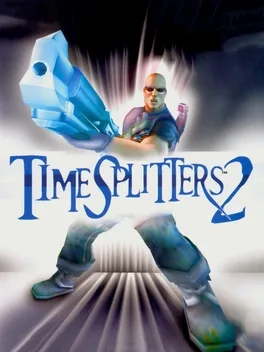
When it comes to the golden era of sixth-generation console shooters, few titles command as much respect and nostalgia as TimeSplitters 2. Developed by Free Radical Design—a studio founded by key members of the team behind the legendary GoldenEye 007 and Perfect Dark—this sequel took everything that worked in the original 2000 release and amplified it. It is a masterclass in frantic, arcade-style action, blending a quirky sense of humor with tight, responsive mechanics. Whether you were fighting through a virus-infested space station or a rainy Chicago street in the 1930s, the game offered a level of variety and charm that remains rare in the genre. Often abbreviated as TS2 by its dedicated community, the game stands as a pillar of early 2000s gaming culture, proving that first-person shooters could be as much about personality and fun as they were about technical prowess.
The narrative of TimeSplitters 2 follows the heroic Sergeant Cortez and Corporal Hart as they pursue a malevolent alien race known as the TimeSplitters. These entities seek to destroy humanity by using time crystals to alter the course of history. To stop them, players must leap through time, assuming the roles of different characters in various historical and future eras to retrieve the stolen crystals. During its development and in certain marketing contexts, the project was associated with titles like TimeSplitter: Invaders of History, reflecting the epic, era-hopping nature of the conflict. The story takes players across nine distinct time periods, ranging from 1932 Chicago and the Wild West of 1853 to a futuristic NeoTokyo in 2019 and a robot factory in 2315. Each level is stylized to match its era, complete with unique cinematic tropes and era-appropriate challenges, making the campaign feel like a collection of mini-action movies.
At its core, TimeSplitters 2 is a fast-paced first-person shooter that emphasizes movement and precision. Unlike many modern shooters that utilize iron sights, the gameplay here is rooted in a more classic, arcade style. The HUD features prominent armor and health bars on the sides of the screen; these bars lower when the player takes damage and must be replenished by walking over body armor and medical kits scattered throughout the levels. Objectives are a central component of the experience, requiring players to perform specific tasks—such as blowing up a dam, hacking a terminal, or escorting an NPC—while fending off waves of enemies. Interestingly, the difficulty settings change the game significantly; higher difficulties don't just increase enemy health but also add entirely new objectives and map areas to explore. Beyond the campaign, TS2 is famous for its robust Arcade and Challenge modes, offering hundreds of unlockables, and a deep MapMaker tool that allowed players to create their own levels and logic, a feature that was vastly ahead of its time on consoles.
This game was released on several major sixth-generation consoles, ensuring its high-paced action reached a wide audience across different regions.
The legacy of TimeSplitters 2 is defined by its contribution to local multiplayer gaming. In an era before online play became the standard, TS2 was the undisputed king of the living room. Its four-player split-screen mode, combined with its incredibly fast frame rate and diverse cast of over 100 playable characters, made it a staple of social gaming. The game’s art style—a slightly caricatured, comic-book aesthetic—has helped it age much better than its more realistic contemporaries. Critics at the time praised its tight controls and massive amount of content, and it frequently appears on lists of the best shooters ever made. It successfully bridged the gap between the design philosophy of Rare's N64 classics and the modern console FPS era, leaving fans clamoring for a revival of the franchise for decades.
TimeSplitters 2 is packed with hidden secrets and clever details. For instance, the game contains fully playable versions of classic arcade games like Snake, Astrolander, and Combat Cars, which can be accessed through the in-game 'TemporalLog' menu once unlocked. Another iconic element is the 'Monkey' character; originally a small, fast-moving target in a specific mini-game, the Monkey became a fan-favorite (and sometimes controversial) choice in multiplayer due to its small hit-box. Additionally, many of the game's sound effects and animation styles are direct nods to the developers' previous work on GoldenEye 007, serving as a spiritual successor for players who had moved on from the Nintendo 64 to newer hardware.
Games
Games