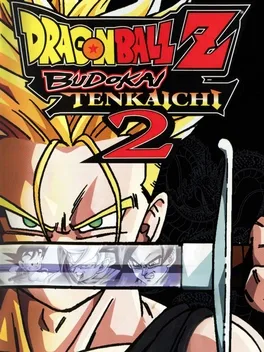
Dragon Ball Z: Budokai Tenkaichi 2
Introduction
Dragon Ball Z: Budokai Tenkaichi 2 stands as a monumental achievement in the history of anime-based fighting games. Originally released during the twilight years of the sixth console generation, this title—known in Japan as Dragon Ball Z: Sparking! NEO—redefined what fans could expect from an interactive adaptation of Akira Toriyama's legendary work. While its predecessor laid the groundwork for 3D arena combat, Tenkaichi 2 expanded upon every conceivable facet, offering a sense of scale and cinematic flair that had never been seen in the franchise before. It wasn't merely a sequel; it was a comprehensive encyclopedia of the Dragon Ball universe, presented through high-octane combat and a massive roster that remains impressive even by modern standards.
Story & Setting
The narrative depth of the game is primarily found within its "Dragon Adventure" mode. This mode is widely considered one of the most exhaustive story campaigns in the history of the series. It begins with the iconic Saiyan Saga, chronicling Goku's sacrifice against Raditz and the desperate battle against Vegeta. From there, it spans the entirety of Dragon Ball Z, including the Frieza, Cell, and Buu sagas. What sets Tenkaichi 2 apart is its inclusion of the Dragon Ball GT era, taking players all the way to the final Dragon Saga involving the Shadow Dragons. Furthermore, the game incorporates various movies and television specials, alongside creative "What-If" scenarios that allow players to explore alternate histories, such as Zarbon rebelling against Frieza or the Saiyan brothers reuniting under different circumstances.
Gameplay
The gameplay mechanics of Dragon Ball Z: Budokai Tenkaichi 2 moved away from the 2.5D plane of the original Budokai series in favor of a full 3D, behind-the-back perspective. This allows for massive, open environments that are almost entirely destructible. Players can utilize the "Z-Search" mechanic to track opponents behind obstacles or charge their Ki to perform devastating signature moves like the Kamehameha or Final Flash. The roster is the game's crowning glory, featuring more than 120 playable characters—the biggest amount ever featured in a Dragon Ball game at the time of its release. This lineup includes everyone from the main protagonists and villains to obscure side characters and movie exclusives. The combat system also introduced more refined teleportation counters, complex combos, and a revamped "Z-Item" customization system that allows players to boost their favorite fighter's stats.
This game was released on several platforms, including the PlayStation 2 and eventually the Nintendo Wii, ensuring that a wide audience could experience its revolutionary combat mechanics.
Legacy
The legacy of Dragon Ball Z: Budokai Tenkaichi 2 is deeply intertwined with the evolution of the "Sparking!" sub-series. It is often credited with perfecting the core engine that would eventually lead to the legendary Tenkaichi 3 and the modern revival of the series. For many fans, this entry hit the perfect sweet spot between a deep story mode and accessible yet rewarding combat mechanics. It proved that 3D arena fighters could capture the verticality and speed of the anime better than traditional 2D fighters of the era. To this day, the game is remembered fondly for its massive roster and its ability to make players feel as though they were truly part of the high-stakes battles seen on screen.
Fun Facts
- In the Japanese version, Dragon Ball Z: Sparking! NEO, the soundtrack featured the original music from the anime composed by Shunsuke Kikuchi, whereas the international version had a brand new rock-oriented soundtrack.
- Despite its massive roster of over 120 characters, every single fighter has unique voice lines for transformations and interactions with specific rivals.
- The game was one of the first in the series to allow for mid-battle transformations, such as Goku going from base form to Super Saiyan 3, which significantly changed his move set and power levels on the fly.
- The "What-If" scenarios in the Dragon Adventure mode were so popular that they became a staple of almost every Dragon Ball game released afterward.