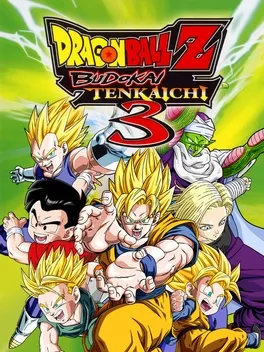
Dragon Ball Z: Budokai Tenkaichi 3
Introduction
When it comes to the pantheon of anime fighting games, few titles command as much respect and nostalgia as Dragon Ball Z: Budokai Tenkaichi 3. Released at the peak of the PlayStation 2's lifespan and the rising popularity of the Nintendo Wii, this game represented the absolute apex of the 3D arena fighting genre. In Japan, fans know it by its equally explosive title, Dragon Ball Z Sparking! Meteor. It wasn't just another sequel; it was a comprehensive celebration of Akira Toriyama's legendary universe, offering fans the most expansive roster and immersive combat system ever seen in the franchise at the time. Whether you were a casual fan of the anime or a hardcore competitive player, this game offered a sense of scale and power that few other adaptations could ever hope to match.
Story & Setting
The narrative scope of Dragon Ball Z: Budokai Tenkaichi 3 is nothing short of breathtaking. Instead of focusing solely on the Z-era, the game spans the entirety of the franchise's history. Through the "Dragon History" mode, players can experience the whimsical adventures of the original Dragon Ball, the high-stakes battles of Dragon Ball Z, the experimental arcs of Dragon Ball GT, and even the non-canonical yet beloved stories from the various feature films. The setting isn't just a background; it is a living part of the experience. From the rocky plains of Earth to the dying planet Namek and the futuristic West City, the stages are fully destructible. Characters can be slammed through mountains or blasted into the ground, leaving craters that persist throughout the fight, perfectly capturing the apocalyptic intensity of the series.
Gameplay
The core gameplay of Budokai Tenkaichi 3 is built upon a refined 3D "behind-the-back" perspective that allows for full 360-degree movement. With a staggering roster of over 162 playable characters, including various forms and fusions, the variety is unparalleled. Each character feels distinct, utilizing unique move sets, combos, and "Blast" attacks. The mechanics are surprisingly deep, featuring systems like the "Sonic Sway" for dodging rapid-fire attacks and the "Z-Counter" for reversing momentum. One of the most significant additions was the dynamic weather and time-of-day system. This wasn't merely aesthetic; for example, Saiyan characters with the ability to transform into Great Apes could only do so on stages with a full moon. The game modes are equally diverse, featuring "Ultimate Training," and "Tournament" modes that simulate the iconic World Martial Arts Tournament.
This game was released on several platforms, including the PlayStation 2 and the Nintendo Wii, ensuring that fans across different console ecosystems could enjoy the action.
Legacy
The legacy of Dragon Ball Z: Budokai Tenkaichi 3 is enduring. Even decades after its release, it remains the gold standard against which all new Dragon Ball games are measured. Its influence can be seen in the Xenoverse series and the recent announcement of Dragon Ball: Sparking! Zero, which serves as a direct spiritual successor to this specific lineage. For many fans, the game’s blend of cinematic presentation, massive roster, and accessible yet deep combat mechanics remains the definitive interactive Dragon Ball experience. It successfully bridged the gap between a standard fighting game and a full-blown simulation of the anime’s chaotic energy, maintaining a dedicated community to this day.
Fun Facts
Did you know that Budokai Tenkaichi 3 held the record for the most playable characters in a fighting game for many years? Another interesting detail is the character interaction system; before a match starts, specific characters will exchange unique dialogue based on their relationship in the anime, such as Goku and Vegeta or Gohan and Piccolo. Furthermore, the "Disc Fusion" system on the PlayStation 2 version was a clever way to reward loyal fans, allowing them to unlock the "Ultimate Battle" modes from the first two Tenkaichi games by simply inserting the older discs when prompted by the software.