Found 1 item(s) for sale
-
Games
Send a Message to
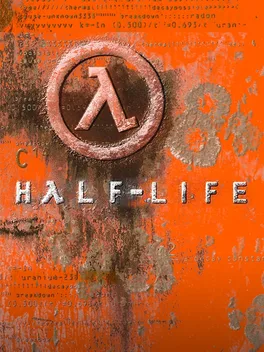
When Valve Corporation released its debut title in 1998, few could have predicted that it would permanently alter the landscape of the first-person shooter genre. Half-Life, often referred to as Half Life or simply HL, broke away from the "run and gun" philosophy of its predecessors. Instead of placing the player in the boots of a space marine, it introduced Dr. Gordon Freeman, a theoretical physicist who happens to be in the wrong place at the right time. This first-person roller-coaster initiated a new era in the history of action games by combining engrossing gameplay, upgraded graphics, and ingenious level design. From the moment the long tram ride into the Black Mesa Research Facility begins, players knew they were experiencing something far beyond the standard fare of the late 90s.
The narrative of Half-Life is a revolutionary story that may not be all that it seems. Set within the sprawling, subterranean Black Mesa Research Facility, the game begins with a failed experiment known as the "resonance cascade." This catastrophe tears a rift between Earth and a hostile alien dimension called Xen. Gordon Freeman must navigate the crumbling facility, fighting off alien invaders and a ruthless military cleanup crew sent to silence the witnesses. Unlike other games of its era, the story is told not through cutscenes, but through the visual environment and scripted in-game sequences. During early development, the project was known as Quiver, a name that hinted at the tension and survival horror elements that permeate the world. The setting is masterfully crafted, making the player feel like a small part of a much larger, unfolding disaster.
The gameplay of HL1 is celebrated for its seamless blend of combat, platforming, and puzzle-solving. Gordon Freeman doesn't speak, yet the world reacts to him in ways that feel organic and urgent. Players utilize a wide array of weaponry, from the iconic crowbar to experimental energy weapons and alien technology. The AI was particularly groundbreaking for its time; enemy soldiers would flank the player, use cover, and retreat when wounded, creating tactical encounters that felt dynamic and unpredictable. The lack of traditional cutscenes meant that control was rarely taken away from the player, maintaining a constant sense of immersion and pacing. This "environmental storytelling" ensured that every corridor and laboratory told a piece of the story, forcing players to pay attention to their surroundings to understand the full scope of the conspiracy.
This game was released on several platforms, including the original PC release and a later port for the PlayStation 2. In various international markets, the game is also known by alternative names, such as 半条命 in Chinese-speaking regions.
The legacy of Half-Life is impossible to overstate. It won over 50 Game of the Year awards and spawned a franchise that includes the legendary Half-Life 2 and the VR masterpiece Half-Life: Alyx. More importantly, it laid the groundwork for the modern narrative-driven FPS. The game's engine, GoldSrc, was a modified version of the Quake engine, which in turn became the foundation for legendary mods like Counter-Strike and Team Fortress Classic. These mods eventually became standalone giants, proving the versatility and longevity of the original game's architecture. To this day, the title remains a gold standard for pacing and environmental narrative design, influencing nearly every story-focused action game that followed.
Before it was the masterpiece we know today, the game's development was nearly scrapped and restarted because the original build wasn't "fun" enough. The initial prototype, Quiver, was heavily inspired by Stephen King’s The Mist. Additionally, the iconic crowbar was not originally intended to be the game's mascot, but its utility and unique feel made it a fan favorite. Another interesting detail is that the character of the G-Man, who watches Gordon from afar, remains one of gaming's biggest mysteries, with his true identity and motives still debated by fans decades later.
Games