Found 1 item(s) for sale
-
Games
Send a Message to
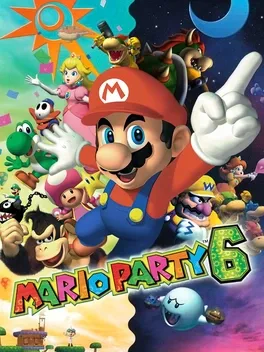
Mario Party 6 arrived on the scene in 2004, marking a significant evolution for the celebrated digital board game franchise. Released during the height of the GameCube's lifecycle, this sixth installment sought to innovate beyond the standard button-mashing mechanics that had defined its predecessors. In South Korea, the game is fondly remembered under its alternative name, '마파6'. What set this title apart from others in the series was its bold inclusion of a hardware peripheral: the Nintendo GameCube Microphone. This addition transformed the social dynamic of the game, inviting players to literally use their voices to influence the outcome of the match. With a focus on accessibility and novelty, Mario Party 6 remains a standout example of Nintendo’s willingness to experiment with interactive technology while maintaining the core fun of the Mushroom Kingdom.
The narrative of Mario Party 6 revolves around a cosmic dispute between two new celestial characters: Brighton, the personification of the Sun, and Twila, the personification of the Moon. The two have begun a heated argument over who is more radiant and impressive, leading to a rift in the sky. To settle their quarrel and restore harmony to the heavens, Mario and his friends from the Mushroom Kingdom suggest a grand festival to collect Power Stars. The setting is vibrant and diverse, spanning several unique game boards such as the lush Towering Treetop, the industrial E. Gadd's Garage, and the chilly Snowflake Lake. Each board is deeply integrated with the central conflict, shifting its appearance and hazards based on the celestial movements of Brighton and Twila.
At its core, Mario Party 6 retains the classic four-player board game structure where players roll dice to navigate a map, purchase Stars, and compete in minigames. However, it introduces the revolutionary Day and Night cycle. Every three turns, the sun sets and the moon rises, fundamentally changing the board's layout, the cost of items, and even the behavior of non-playable characters. This installment features more than 80 minigames, ranging from free-for-all battles to 2-on-2 and 1-on-3 challenges. The highlight is the Microphone mode, where the included controller allows players to play as Mario, Bowser, or other characters while shouting verbal commands to navigate obstacles or answer trivia. The strategic use of 'Orbs'—which replaced the previous 'Capsule' system—allows players to set traps or gain advantages on the board, adding a layer of tactical depth to the chaotic fun.
This game was released as a premier exclusive for its generation, showcasing the experimental spirit of the console's hardware and peripheral support.
Mario Party 6 is often hailed by the community as one of the best entries in the series, specifically within the GameCube era. It successfully bridged the gap between the traditional gameplay of the early titles and the more experimental phases that followed. The Day and Night mechanic was so well-received that fans have clamored for its return in modern iterations. Furthermore, the game’s use of voice control was a precursor to the motion and touch controls that would dominate the industry in the years to follow. It solidified the franchise as a staple of local multiplayer, proving that a mix of luck, strategy, and innovative hardware could create an unforgettable party experience.
Mario Party 6 was the very first game in the series to feature Toadette as a playable character right from the start, following her debut in Mario Kart: Double Dash!!. Another interesting fact is that the GameCube Microphone bundled with the game was later utilized in other niche titles like Odama and Chibi-Robo!. Additionally, while Bowser is usually the primary antagonist, in this game he takes a more chaotic role, appearing specifically during the night phases to wreck havoc on the players' progress, while the daytime remains relatively peaceful under Brighton's watch.
Games