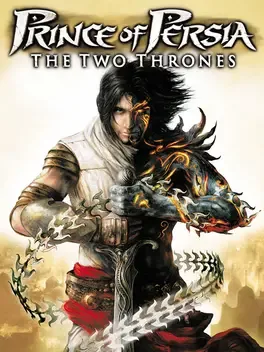
Prince of Persia: The Two Thrones
Introduction
Prince of Persia: The Two Thrones is the grand finale to the legendary Sands of Time trilogy. Developed by Ubisoft Montreal and released in late 2005, the title, often referred to by fans as POP T2T or PoP: TTT, arrived at a time when the series needed to bridge the gap between its poetic origins and its darker middle chapter. Following the stylistic shift seen in Warrior Within, this third installment (or PoP: T2T) successfully merged a compelling narrative with refined acrobatic combat. It remains one of the most polished action-adventure games of the sixth generation, delivering a satisfying end to the Prince's journey across the sands of fate.
Story & Setting
The narrative picks up immediately where Warrior Within left off. After defeating the Dahaka and saving Kaileena, the Empress of Time, the Prince returns to his home city of Babylon. However, instead of the peaceful homecoming he envisioned, he finds the city engulfed in flames and under siege by a familiar enemy. In international versions like Prince of Persia: Las Dos Coronas and Prince of Persia: I Due Troni, the plot focuses heavily on the Prince’s internal struggle. The sacrifice of Kaileena releases the Sands once more, infecting the Prince and giving rise to the "Dark Prince"—a cynical, cruel manifestation of his own psyche. The setting of Babylon provides a vertical playground of burning rooftops and crumbling palaces, setting the stage for a psychological and physical battle for the throne.
Gameplay
The core gameplay of Prince of Persia: The Two Thrones introduces a dual-character mechanic. Players alternate between the standard Prince, who utilizes traditional swordplay and stealth, and the Dark Prince, who wields a deadly "Daggertail" whip. The Dark Prince’s sections are fast-paced, as his health constantly depletes, requiring the player to kill enemies and harvest Sands to survive. The game also introduced the "Speed Kill" system, a cinematic stealth mechanic that rewarded players for timing their strikes during surprise attacks. This system was further explored in the port titled Prince of Persia: Rival Swords, which utilized the Wii's motion controls. Parkour remains central, with the Dagger of Time allowing for the iconic rewinding of mistakes.
This game was released on several platforms, including the Xbox, Microsoft Windows, PlayStation 2, and the Nintendo GameCube, with later ports for handhelds and high-definition consoles.
Legacy
The legacy of The Two Thrones is defined by its ability to provide a cohesive ending to a complex saga. Whether known as Prince of Persia 3: Les Deux Royaumes in France or Prince of Persia: Dwa Trony in Poland, the game is remembered for its high production values and its refined balance of tone. It proved that Ubisoft could listen to feedback, moving away from the heavy metal aesthetics of its predecessor to return to the Arabian Nights-inspired charm of the first game. The trilogy's influence can still be seen in modern platformers and the early Assassin's Creed titles, which inherited much of the Prince's DNA.
Fun Facts
To appeal to various global markets, the game was localized with titles such as Bosi Wangzi: Wangzhe Wushuan in China and Prince of Persia: Dva Trůny in the Czech Republic. A unique trivia point is that the Dark Prince's health mechanics were designed to simulate a frantic rush, differing from the slower, more methodical pace of the standard Prince. Additionally, the Wii version of the game added motion-sensing functionality to the Speed Kill system, making the timing-based kills feel more interactive for the player.