Found 1 item(s) for sale
-
Games
Send a Message to
Introduction Story & Setting Gameplay Platforms Legacy Fun Facts
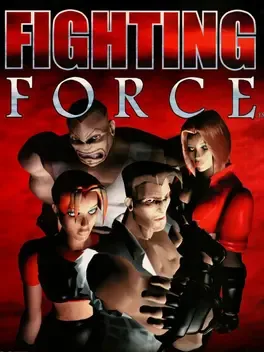
In the late 1990s, the gaming industry was undergoing a massive technological shift. As 2D sprites gave way to the burgeoning world of 3D polygons, classic genres faced the challenge of evolution. One of the most prominent examples of this transition was Fighting Force, a 3D beat 'em up developed by Core Design—the same team behind the legendary Tomb Raider series. Released in 1997, Fighting Force was a bold attempt to recapture the visceral thrill of side-scrolling brawlers like Final Fight and Streets of Rage within a fully navigable three-dimensional space. Known in Japan as Metal Fist and later released on other systems as Fighting Force 64, it remains a nostalgic touchstone for players who grew up in the 32-bit era.
The narrative of Fighting Force centers on a group of four protagonists united by a common goal: stopping the doomsday ambitions of a criminal mastermind named Dr. Zeng. Believing a global catastrophe is imminent at the turn of the millennium, Zeng decides to seize control and establish himself as the ruler of the chaos using his private army. The adventure begins with the heroes breaking through a police cordon surrounding Zeng's office skyscraper. From there, the setting expands into various urban and industrial locales. Players fight through a bustling shopping mall, navigate dangerous subway systems, and infiltrate a heavily guarded Coast Guard base. The journey eventually leads to a dramatic showdown at the top of Zeng's high-tech island headquarters. The environments are gritty and characteristic of the late-90s "urban warrior" aesthetic, blending modern cityscapes with science fiction elements.
At its core, Fighting Force is about visceral 3D combat. Players select one of four characters: Hawk Manson, Mace Daniels, Alana McKendrick, or Ben Jackson. Each fighter brings a unique balance of speed and power, allowing for different tactical approaches to the waves of oncoming enemies. The game utilizes a 3D engine that allows players to move freely in all directions, a significant departure from the fixed planes of earlier brawlers. One of the game's standout features is its heavy emphasis on environmental interaction. Almost everything that isn't nailed down can be used as a weapon. Players can pick up chairs, crates, and bottles to toss at foes, or use traditional weapons like knives and guns. Even the scenery is destructible; smashing a vending machine might yield a health-restoring soda, while destroying a car provides extra points and a clear path. Furthermore, the game offers a degree of non-linearity, allowing players to make choices regarding which territory to travel through.
Fighting Force was a multi-platform release that saw popularity across various home consoles and handheld systems over the years, including various ports for modern digital stores.
The legacy of Fighting Force is inextricably linked to the history of Sega. Interestingly, the project was originally pitched to Sega as a potential fourth entry in the Streets of Rage franchise. When Sega declined the proposal, Core Design and publisher Eidos Interactive pivoted to create a standalone brand. While the game received mixed reviews upon release—often criticized for its repetitive nature—it was a commercial success, particularly on the PlayStation. It paved the way for a sequel, Fighting Force 2, though the follow-up pivoted away from traditional brawling toward a more stealth-action approach. Today, the original remains a cult favorite, remembered as one of the definitive 3D beat 'em ups of its time.
Despite the game being closely associated with the PlayStation, a Sega Saturn version was fully developed and even reviewed by gaming magazines of the time, though it was cancelled late in development. It eventually saw the light of day years later through leaked prototypes. In Japan, the game was retitled Metal Fist, reflecting the hard-hitting nature of its combat. For Nintendo 64 owners, the game was rebranded as Fighting Force 64, featuring minor graphical adjustments suited for that hardware. Additionally, the game’s destructible environments were considered quite impressive for 1997, as very few games at the time allowed players to dismantle nearly every object in a level for use in combat.
Games