Found 6 item(s) for sale
-
Games
Send a Message to
-
Games
Send a Message to
-
Games
Send a Message to
-
Games
Send a Message to
-
Games
Send a Message to
-
Games
Send a Message to
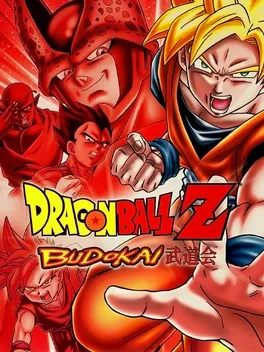
When it comes to the pantheon of anime-based video games, few titles hold as much nostalgic weight as Dragon Ball Z: Budokai. Released in 2002, this title, often referred to by fans as DBZ: Budokai, marked a significant shift for the franchise as it transitioned into the realm of 3D-modeled fighting games on sixth-generation hardware. It wasn't just a game; it was a cinematic experience that allowed fans to step directly into the boots of their favorite Saiyans, Namekians, and Androids. At a time when the anime was reaching its peak popularity in the West, Budokai served as the perfect gateway for players to relive the most iconic moments of Akira Toriyama’s legendary series.
Join us on a wild ride through the best action cartoon series on TV, Dragonball Z. The narrative depth of Dragon Ball Z: Budokai is one of its strongest selling points. The story begins after Goku defeats Piccolo at the World Martial Arts Tournament and he comes to visit Master Roshi. The peace is short-lived, however, as all of a sudden, his brother Raditz appears and kidnaps his son, Gohan. This shocking revelation sets off a chain of events that defines the first half of the series. After he saves Gohan, Goku is sent to Other World to train with King Kai in preparation for two more powerful Saiyans arriving one year later.
This wild ride story takes you from the Saiyan Saga all the way to the climactic Cell Games Saga. Players get to experience the desperate struggle on Planet Namek against the Ginyu Force and the tyrant Frieza, followed by the arrival of the mysterious Trunks and the rise of the terrifying Androids. The game meticulously recreates key cutscenes using its in-game engine, providing a sense of continuity and drama that was revolutionary for the time.
Dragon Ball Z: Budokai features a robust fighting system that balances accessibility with strategic depth. Unlike traditional 2D fighters, the game utilizes a "Burst" system and a unique "Skill System" centered around capsules. Players can customize their characters by equipping various capsules that represent special moves, physical transformations, and support items. This allows for a personalized experience—one player's Goku might focus on raw power and the Spirit Bomb, while another's might prioritize speed and defensive maneuvers.
There are also several options in the game to keep players engaged. There is a World Tournament mode where you could buy new moves using the Zenie earned from matches, providing a sense of progression. For those looking to master the mechanics, there is a Practice mode where you can sharpen your skills before entering story mode. Furthermore, the game rewards exploration and dedication; you could also summon Shenron when you collect all 7 Dragonballs, granting you rare and powerful skills. Whether you are blasting a Kamehameha or engaging in a high-speed rush attack, the gameplay captures the kinetic energy of the source material perfectly.
This game was released on several platforms, allowing a wide audience of console gamers to enjoy the Z-fighters' journey during the early 2000s.
Dragon Ball Z: Budokai laid the groundwork for what would become one of the most successful anime game trilogies in history. While later entries would refine the mechanics and introduce cell-shaded graphics to better mimic the anime's look, the original Budokai is remembered for its ambitious cinematic story mode and the introduction of the Skill System. It proved that Dragon Ball games could be high-quality productions that appealed to both hardcore fighting game enthusiasts and casual anime fans. Its success paved the way for the Budokai Tenkaichi series and, eventually, modern masterpieces like Dragon Ball FighterZ.
Games
Games
Games
Games
Games
Games