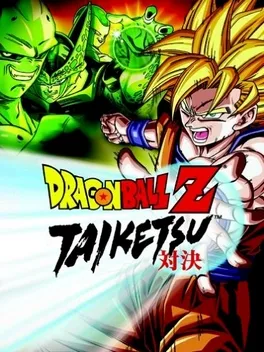
Dragon Ball Z: Taiketsu
Table of Contents
Introduction
Dragon Ball Z has a long and storied history in the world of video games, spanning multiple console generations and countless genres. While the high-profile Budokai and Tenkaichi series often steal the spotlight on home consoles, the handheld entries on the Game Boy Advance offered unique, and sometimes divisive, interpretations of the Saiyan saga. One such title is Dragon Ball Z: Taiketsu, a brawler that aimed to bring the high-octane action of the anime to the palm of your hand. It was released during a time when Dragon Ball fever was at its peak in the West, and every new title was met with immense anticipation by fans eager to control their favorite warriors in a portable format.
Story & Setting
Like most fighting games based on Akira Toriyama's masterpiece, Dragon Ball Z: Taiketsu doesn't follow a rigid linear narrative. Instead, it serves as a massive collision point where heroes and villains collide from across the DBZ timeline. From the noble Z-Fighters like Goku, Gohan, and Piccolo to the terrifying threats of Frieza, Cell, and even the mighty Broly, the setting is a relentless fight for dominance. The game spans various iconic locales from the series, such as the Namekian plains and the Cell Games arena, providing a backdrop where power levels are tested and the fate of the universe is decided through pure, unadulterated combat. It captures the essence of the DBZ universe where every encounter feels like a high-stakes duel between the galaxy's strongest beings.
Gameplay
The core of Taiketsu is its 2D fighting engine, which attempts to translate the verticality and explosive speed of the anime into the constraints of handheld hardware. Players can choose from a roster of 15 of the greatest warriors, each meticulously designed with their own set of devastating combos and signature super moves. A distinguishing feature is the ability to fight both on land and in the air, mimicking the series' famous aerial duels that defy gravity. Multiplayer is a significant focus, allowing friends to link up using the GBA Link Cable for huge multiplayer battles to see who is truly the strongest fighter. However, players must stay alert and keep their defenses up; the game rewards precision, and you must make sure you are not caught off guard, as doing so often results in a swift defeat via a cinematic super move. The combat system involves building up energy to unleash powerful blasts alone or against others, ensuring that every second of the fight is intense.
This game was released exclusively for the Game Boy Advance, providing a portable fighting experience for fans on the go.
Legacy
Dragon Ball Z: Taiketsu occupies a curious and somewhat controversial spot in the franchise's history. Developed by Webfoot Technologies, it was a major departure from their work on the beloved Legacy of Goku action-RPG series. Upon its release, the game received a polarizing reception from both critics and fans. While many appreciated the inclusion of legendary characters like Broly and the attempt at a technical fighter on the GBA, others found the digitized sprite art style and stiff controls to be a significant hurdle. Despite these criticisms, Taiketsu remains a nostalgic piece of early 2000s gaming history. It is remembered as a bold experiment that tried to push the GBA's limits in terms of visual presentation and roster depth, and it remains a frequent topic of discussion among retro gaming collectors today.
Fun Facts
- Dragon Ball Z: Taiketsu was one of the first Western-developed Dragon Ball Z games to feature the legendary Super Saiyan Broly as a playable character.
- The game utilizes a pre-rendered 3D-to-2D sprite style, a technique made famous by titles like Donkey Kong Country, which was intended to give characters a three-dimensional look on a 2D screen.
- Despite facing tough reviews from some gaming outlets at the time, the title was a commercial success, highlighting the massive power of the Dragon Ball brand during its broadcast run on Toonami.
- The character roster includes fan favorites that were relatively rare in handheld games during that period, such as Raditz and Nappa, allowing fans to play through the earliest roots of the Saiyan saga.