Found 1 item(s) for sale
-
Games
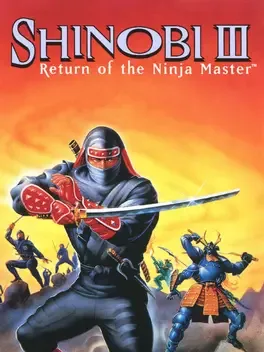
Shinobi III: Return of the Ninja Master
Seller: retrogameplace
Country of origin: Spain
Status: loose
Image ofSend a Message to
Released in 1993, Shinobi III: Return of the Ninja Master stands as a pinnacle of action gaming on the 16-bit Sega Genesis. Known in Japan as The Super Shinobi II, this title serves as the fourth entry in the legendary Shinobi franchise. Developed by Sega, it represents the direct chronological sequel to the 1989 classic The Revenge of Shinobi. While the series had already established itself as a staple of the arcade and home console era, Shinobi 3 took everything its predecessors did and refined it to a razor-sharp edge. For many fans, this entry remains the definitive ninja experience, blending high-speed acrobatics with strategic combat and exceptional presentation.
The narrative picks up after the events of the previous games, where the master ninja Joe Musashi thought he had finally dismantled the criminal empire known as Neo Zeed. However, peace is short-lived. Two years after his hard-fought victory, Neo Zeed resurfaces under the leadership of a mysterious new figure. The organization begins to consolidate power, threatening the stability of the world once again. Musashi, sensing the shift in the shadows, descends from the mountains to face his old enemies once more. The setting takes players through a variety of evocative environments, from secret high-tech laboratories and biological research facilities to ancient forests and high-speed chase sequences across fields and oceans. The atmosphere perfectly captures the "techno-ninja" aesthetic that defined Sega’s vision of the character.
The core gameplay of Shinobi III: Return of the Ninja Master focuses on fluidity and speed. Unlike its predecessor, which featured a somewhat slower and more deliberate pace, The Super Shinobi 2 emphasizes movement. Joe Musashi is significantly more agile here; he can now dash across the screen, perform a powerful flying kick, and utilize a wall-jump to reach higher ground. These additions completely changed the dynamic of the encounters. Of course, the signature shuriken throwing remains a central mechanic, but players must manage their limited stock carefully. Musashi also carries a katana for close-quarters combat, and the transition between projectiles and melee is seamless.
In addition to physical prowess, players have access to four powerful Ninjutsu techniques. These include "Ikazuchi," which provides an electrical shield; "Karyu," which summons pillars of fire; "Fushin," which enhances jumping ability; and the desperate "Mijin," where Musashi sacrifices a life to deal massive damage to everything on screen. The game also introduces variety through unique levels, such as a high-speed horseback pursuit and a futuristic surfing sequence, ensuring the action never feels repetitive.
This legendary title was originally developed for Sega's 16-bit powerhouse, but it has since found its way onto various modern systems through numerous collections and digital storefronts.
Shinobi III: Return of the Ninja Master is frequently cited by critics and historians as one of the greatest action games of all time. It pushed the Sega Mega Drive to its technical limits, featuring some of the most impressive parallax scrolling and sprite work seen on the console. The soundtrack, composed by Hirofumi Murasaki, Morihiko Akiyama, and Masayuki Nagao, is equally legendary, providing a driving, atmospheric backdrop that perfectly complements the action. While it is sometimes overshadowed by other Sega icons like Sonic the Hedgehog, its influence on the 2D action genre is undeniable. In various regions, including markets where it is known by names like 超级忍2, it is remembered as a masterclass in game design.
Interestingly, the development of the game was quite turbulent. An early version of the game was almost finished in 1992 but was ultimately scrapped because Sega felt it wasn't up to the quality standards of the series. This led to a significant delay, but the extra year allowed the team to polish the graphics and implement the new movement mechanics that fans love today. Another trivia point is the game’s difficulty; while it is often considered easier than its predecessor, the "Expert" mode still provides a brutal challenge. Finally, despite the numbering in the West (Shinobi III), it is actually the fourth game in the main lineage if you count the arcade original, Shadow Dancer, and Revenge.
Games
Shinobi III: Return of the Ninja Master
Seller: retrogameplace
Country of origin: Spain
Status: loose