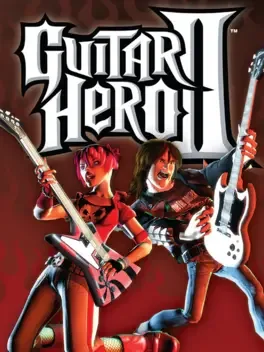
Guitar Hero II
Introduction
Story & Setting
Gameplay
Platforms
Legacy
Fun Facts
Introduction
Step onto the stage and prepare to melt some faces with Guitar Hero II, the follow-up to the cultural phenomenon that turned living rooms into concert halls. Released during the height of the rhythm game craze, Guitar Hero 2 (as it is often titled) redefined what it meant to be an interactive music experience. Whether you knew it as GH:II or simply the greatest party game of its era, this title allowed players to step into the boots of a burgeoning rock legend. It was not just about pressing buttons; it was about the tactile thrill of a guitar-shaped controller, the surge of adrenaline during a difficult solo, and the satisfaction of nailing a five-star performance on Expert difficulty. The game successfully captured the rebellious spirit of rock and roll and packaged it into a polished, addictive package that resonated with millions.
Story & Setting
In Guitar Hero II, the narrative is driven by the Career mode, which tracks your meteoric rise from a local garage band to global superstars. Players start their journey in humble, gritty venues like The Rat Cellar and the Blackout Bar, where the crowds are small but the energy is raw. As you master more complex tracks, the settings evolve, taking you to higher-profile locations like the RedOctane Club, the Vans Warped Tour, and eventually, the massive Stonehenge festival. The game’s aesthetic is steeped in rock-and-roll subculture, featuring stylized characters with over-the-top personalities, from the punk-rocker Johnny Napalm to the gothic Siren. The sense of progression is palpable as you unlock new venues and more expensive gear, truly capturing the "rags to riches" fantasy of the music industry through a colorful, animated lens.
Gameplay
The core gameplay of GH:2 remains faithful to the original but introduces significant refinements. Players use a guitar peripheral with five colored fret buttons and a strum bar to hit notes that scroll down the screen in time with the music. Success fills a "Star Power" meter, which can be activated by tilting the guitar upward, doubling the score multiplier and helping the player survive difficult sections. Guitar Hero II expanded the multiplayer experience significantly, introducing the "Pro Face-off" mode where two players compete on the same difficulty level with the same notes. It also featured a "Co-op" mode, allowing one player to handle the lead guitar while the other plays rhythm or bass. This version also added the "Practice Mode," a crucial feature for those looking to master the game's most punishing solos by slowing down specific sections of a song. These mechanics made the game accessible to newcomers while providing a high ceiling for veterans.
This game was released on several platforms, including the PlayStation 2 and later the Xbox 360, bringing high-definition rock to a new audience.
Legacy
The legacy of Guitar Hero II cannot be overstated. It was the game that proved the rhythm genre had mainstream staying power, selling millions of copies and becoming a staple of pop culture. It was the final entry in the main series developed by Harmonix before they moved on to create Rock Band, making it a high-water mark for the original design philosophy of the series. The soundtrack, featuring hits from bands like Van Halen, Rush, and Guns N' Roses, introduced a new generation to classic rock and metal. Its influence extended beyond gaming, leading to a surge in real guitar sales and music education. To this day, fans still consider GH:II one of the most balanced and challenging entries in the franchise, often citing its tight timing windows and excellent setlist as the gold standard for the genre.
Fun Facts
- The song "Jordan" by Buckethead, which appears as a bonus track, is widely considered one of the hardest songs in the history of the franchise due to its blistering solo sections.
- Guitar Hero II was the first game in the series to offer downloadable content (DLC) on the Xbox 360 version, allowing players to expand their library.
- Many of the songs in the game are high-quality covers rather than original master recordings, a practice that was common at the time due to licensing complexities.
- The "X-plorer" controller released with the Xbox 360 version is still highly sought after today by rhythm game enthusiasts for its reliability and low latency.