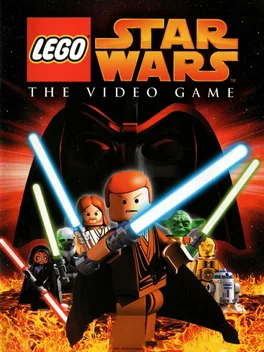
LEGO Star Wars: The Video Game
Introduction
When LEGO Star Wars: The Video Game first arrived on the scene in 2005, few could have predicted the cultural phenomenon it would spark. Developed by Traveller's Tales, this title—often simply referred to as LEGO Star Wars or LEGO Star Wars: The Videogame—took a bold step by combining the blocky, imaginative world of LEGO with the sprawling space opera of the Star Wars universe. It was a match made in heaven, blending lighthearted humor with iconic cinematic moments. By reimagining the Prequel Trilogy through a plastic lens, the developers created an experience that appealed to both children and veteran fans of the galaxy far, far away. This game didn't just tell a story; it invited players to break it apart and rebuild it, brick by brick, setting a new standard for family-friendly gaming.
Story & Setting
The narrative of LEGO Star Wars: The Video Game focuses exclusively on the Prequel Trilogy, encompassing the events of The Phantom Menace, Attack of the Clones, and Revenge of the Sith. Players begin their journey in the familiar halls of a Trade Federation cruiser and follow the path of the Jedi through the political turmoil and grand battles that define the era. The game masterfully translates high-stakes drama into silent, slapstick comedy, as the characters communicate through expressive grunts and pantomime rather than traditional dialogue. From the high-speed podracing on Tatooine to the climactic and tragic duel on the volcanic planet of Mustafar, the game covers every major beat of Episodes I through III. The setting is anchored by Dexter's Diner, which serves as the game’s central hub, allowing players to access different chapters and view their collected treasures.
Gameplay
At its core, the gameplay is an accessible mix of action, platforming, and puzzle-solving. Players control a rotating cast of over 50 characters, each with unique abilities essential for progression. Jedi and Sith characters use Lightsabers and the Force to move objects or deflect bolts, while blaster-wielding characters use grappling hooks to reach high ledges. Droids like R2-D2 and C-3PO are used to bypass security doors, and high-jumpers like Jar Jar Binks are necessary to reach hidden areas. A defining mechanic is the "stud" system, where players collect small LEGO pieces to purchase new characters and extras. Achieving "True Jedi" status in a level requires collecting a specific number of these studs. The game also popularized the "drop-in/drop-out" local cooperative mode, making it one of the most celebrated multiplayer experiences of its time. If a character dies, they simply shatter into pieces and respawn instantly, which keeps the frustration low and the focus on fun.
This game was released on several major platforms during the mid-2000s, including the Xbox, PlayStation 2, and Nintendo GameCube.
Legacy
The legacy of LEGO Star Wars: The Video Game cannot be overstated. It established a "LEGO formula" that Traveller's Tales would refine for decades, leading to successful adaptations of Batman, Harry Potter, and Marvel properties. At a time when movie-tie-in games were often viewed with skepticism, this title proved that licensed properties could be innovative and high-quality. It is credited with revitalizing the LEGO brand in the digital space and bringing a new generation of fans to Star Wars. Its success paved the way for the "Original Trilogy" sequel and eventually the massive "Skywalker Saga" compilation. For many, it remains the gold standard for how to handle a beloved franchise with both reverence and a sense of play.
Fun Facts
Interestingly, LEGO Star Wars: The Videogame was released just before the theatrical debut of Revenge of the Sith, meaning many fans actually experienced the plot of the third film through LEGO bricks before seeing it on the big screen! Another fun detail is the secret level; if you collect enough gold bricks throughout the campaign, you can unlock a special mission that recreates the opening scene of A New Hope, bridging the gap between the two trilogies. Furthermore, despite the game featuring "pantomime" voices, the grunts and sighs were performed by professional voice actors to ensure the comedic timing was perfect. Finally, the character creator in the diner allowed for millions of combinations, leading to some truly bizarre and powerful custom Force-sensitive creations.