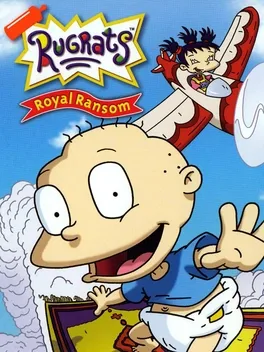
Rugrats: Royal Ransom
Table of Contents
Introduction
Rugrats: Royal Ransom is a nostalgic journey into the imaginative world of Nickelodeon’s most famous toddlers. Released in 2002, this title arrived during a golden era of licensed platformers where THQ dominated the market with beloved animated properties. Known in French-speaking regions as Les Razmoket : La Rançon Royale, the game captures the essence of the long-running television show while providing a structured adventure tailored for younger audiences. As one of the later titles in the Rugrats gaming library for sixth-generation consoles, it represents a bridge between the classic 2D era and the more ambitious 3D adventures that defined the PlayStation 2 and GameCube era. For fans of the series, it offered a chance to step directly into the diapers of their favorite characters and explore a world built on childhood wonder.
Story & Setting
The narrative of Rugrats: Royal Ransom is centered around a massive, high-tech play structure known as the Play Palace 3000, a massive invention by the ever-eccentric Stu Pickles. The plot is loosely based on the concepts found in the handheld title Rugrats: Castle Capers, emphasizing a medieval fantasy theme within a backyard setting. The conflict begins when the bossy Angelica Pickles decides to claim the Play Palace as her own personal kingdom. Declaring herself queen, she seizes the babies' favorite toys and hides them across various themed levels within the structure. Tommy, Chuckie, Phil, and Lil must navigate this "royal" landscape to reclaim their belongings and dethrone the self-appointed monarch. The setting is a brilliant reflection of the show's core premise: taking mundane, everyday locations and transforming them into epic landscapes through the lens of a child’s vivid imagination.
Gameplay
At its core, Rugrats: Royal Ransom is an action-adventure platformer that emphasizes exploration and item collection. Players can take control of several characters, including Tommy Pickles and Chuckie Finster, each rendered in 3D models that were quite faithful to the show's aesthetic at the time. The gameplay involves traversing diverse environments that range from snowy peaks to lush forests, all contained within the imaginary zones of the Play Palace. To progress, players must collect specific items like batteries and tokens, which are essential for powering the various gadgets Stu has built. The game also features a variety of mini-games and boss encounters, primarily involving Angelica and her schemes. The controls were designed with a younger demographic in mind, featuring forgiving jump mechanics and straightforward combat or avoidance strategies. Each level is littered with hidden secrets, encouraging kids to explore every corner of the environment to find their lost toys. The variety in level design ensures that the pace stays fresh as players move from one "kingdom" to the next.
This game was released on several platforms, including the PlayStation 2 and the Nintendo GameCube, ensuring wide availability during its initial run.
Legacy
Rugrats: Royal Ransom holds a specific place in the history of Nickelodeon interactive media. It was published during the height of THQ's partnership with Nickelodeon, a deal that produced some of the most memorable licensed games of the early 2000s. While it didn't reinvent the platforming genre, it was praised for its authentic voice acting—utilizing the original cast from the show—and its ability to capture the tone of the series perfectly. For many fans who grew up in the early 2000s, it remains a comfort game that evokes the Saturday morning cartoon atmosphere. It also marked one of the final major console appearances for the original Rugrats cast before the franchise pivoted toward the spin-off series, All Grown Up!, making it a final celebration of the characters' toddler years.
Fun Facts
- The game is considered a spiritual successor or console counterpart to the Game Boy Advance title Rugrats: Castle Capers, sharing many thematic elements.
- Despite being marketed as a children's game, some of the late-game platforming sections and hidden token locations are surprisingly challenging for completionists.
- In the French version, titled Les Razmoket : La Rançon Royale, the voice lines were fully localized to match the specific French dub of the television series.
- The Play Palace 3000 serves as a central hub for the game, a popular design trope in platformers of that era like Super Mario 64 or Spyro the Dragon, allowing for non-linear level selection.