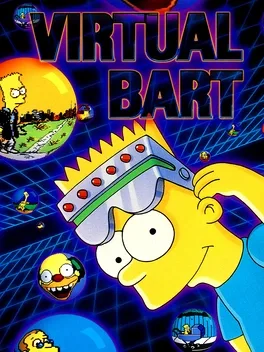
Virtual Bart
Introduction
In the early 1990s, the world was gripped by "Simpsons-mania," and video game consoles were the primary battlefield for the franchise's expansion. Among the various titles released during this era, Virtual Bart stands out as one of the most experimental and visually distinct. Developed by Sculptured Software and published by Acclaim in 1994, the game moved away from the standard platforming of its predecessors to embrace a multi-genre, "variety show" format. It serves as a spiritual successor to Bart's Nightmare, taking players on a surreal journey through the imagination and digital mishaps of Springfield’s most famous troublemaker. Known universally by its singular title, the game offered a challenge that few 16-bit era gamers would ever forget.
Story & Setting
The narrative of Virtual Bart is perfectly in line with the show's penchant for satirical sci-fi. The game begins at the Springfield Elementary science fair, where the resident boy genius, Martin Prince, has unveiled his latest masterwork: a high-tech Virtual Reality machine. Ever the curious prankster, Bart Simpson finds himself strapped into the device for a test run. However, things quickly take a turn for the worse. Bart’s reality goes virtual, and he becomes trapped within the machine's rotating simulations. Each virtual reality program represents a stage in the game that Bart must play through in order to escape the machine before the programs crash. The setting transitions from prehistoric landscapes to post-apocalyptic ruins, all while maintaining the vibrant, cartoonish aesthetic of the television series.
Gameplay
The gameplay in Virtual Bart is divided into six distinct stages, which are accessed by chance via a wheel-of-misfortune. Players must spin the wheel to determine their next challenge, adding an element of unpredictability to every playthrough. The game consists of three side-scrolling platform stages and three stages that take place from a rear view, ensuring a mix of 2D and pseudo-3D mechanics.
In the platforming segments, Bart assumes the roles of a pig, dinosaur, and baby. As "Dino Bart," he must navigate a primitive Springfield using tail whips and jumps to survive. As "Pig Bart," he navigates Krusty the Clown’s slaughterhouse, attempting to free his fellow swine from becoming Krusty Burgers. The "Baby Bart" stage is perhaps the most surreal, featuring a diaper-clad Bart swinging through trees and navigating a hazardous nursery environment.
In the remaining three stages, the perspective shifts. Bart tosses tomatoes and eggs at his classmates in a shooting-gallery-style school photo stage, slides down the treacherous pipes of the Mt. Splashmore water slide, and drives a motorcycle through a post-apocalyptic Springfield in a parody of the Mad Max films. The variety of mechanics—from aiming projectiles to dodging obstacles at high speeds—requires players to master multiple playstyles to reach the end credits.
This game was released on several platforms, including the Sega Mega Drive/Genesis and the Super Nintendo Entertainment System.
Legacy
Virtual Bart remains a polarizing but nostalgic piece of The Simpsons gaming history. While it was praised at the time for its impressive digitized graphics and faithful recreation of the show's art style, it became equally famous for its brutal difficulty. Many players remember the frustration of the "Wheel of Misfortune" landing on the same difficult stage repeatedly. Despite the challenge, its legacy is one of creativity; it represents a time when developers were willing to take risks with major IPs, resulting in a game that feels like a fever dream of 90s pop culture. It remains a frequent subject for retro gaming enthusiasts and collectors of 16-bit memorabilia.
Fun Facts
- The game features digitized voice clips from the actual voice actors of the show, a high-end feature for the SNES and Genesis era.
- If you land on the skull icon on the wheel-of-misfortune, you lose a life instantly, adding to the game's reputation for being unforgiving.
- The "Road Warrior Bart" stage features cameos from various Springfield residents reimagined as wasteland thugs, including a mohawked Otto and a menacing Jimbo Jones.
- The ending of the game varies depending on the difficulty level, encouraging players to master the machine's glitches on the hardest settings.