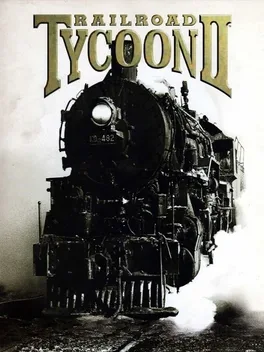
Railroad Tycoon II
Introduction
In the pantheon of business simulation games, few names carry as much weight as Sid Meier’s Railroad Tycoon. While the original game revolutionized the genre under the guidance of Sid Meier and MicroProse, it was the sequel, Railroad Tycoon II (often referred to as Railroad Tycoon 2), that truly elevated the experience for a new generation of players. Released during the golden age of isometric strategy games, this title invited players to step into the boots of a 19th-century industrialist and build a transportation empire that could span continents. Combining deep economic strategy with the tactile joy of laying tracks and watching steam engines puff across the landscape, it remains a high-water mark for simulation enthusiasts worldwide.
Story & Setting
The narrative of Railroad Tycoon II is one of ambition and industrial progress. Rather than a linear story, the game provides a historical sandbox that spans from the early 1830s—the dawn of the steam age—to the late 20th century and even slightly into the future. Players are cast as aspiring entrepreneurs, often referred to as "wannabe" tycoons, who must navigate the shifting tides of history. The setting is global, featuring scenarios that take place in the rugged terrain of the American West, the industrial heartlands of Europe, and the challenging landscapes of Africa and Asia. As history marches forward, the world changes around you; wars break out, economies crash, and the technology of transportation evolves from primitive wood-burners to high-speed electric locomotives.
Gameplay
The core gameplay of Railroad Tycoon II is a sophisticated blend of logistics and high-stakes finance. At its most basic level, you are tasked with connecting cities and resources. You must survey the terrain, lay down tracks while minding the grades and curves, and build stations to facilitate the movement of cargo and passengers. However, the game is far more than a simple train set. It is a rigorous business simulation where you must manage your company's balance sheet, deal with fluctuating cargo prices, and satisfy demanding stockholders.
The economic layer is where the game truly shines. Players can issue bonds, buy and sell stocks in their own company or those of their rivals, and even attempt hostile takeovers. You are not just competing against the map; you are competing against other AI-controlled tycoons who are just as eager to dominate the market as you are. Whether you are optimizing a short-haul coal route or building a transcontinental passenger line, every decision—from the type of locomotive you purchase to the dividend you pay your investors—can mean the difference between becoming a legend or falling into bankruptcy.
This game was released on several platforms, including the PC and Mac, but it notably brought its deep simulation mechanics to the console market as well. Unlike many other entries in the franchise, this particular installment found a home in the living room, allowing players to manage their empires from their couches.
Legacy
Railroad Tycoon II is celebrated for its perfect balance of accessibility and complexity. It successfully transitioned the series from the tile-based graphics of the early 90s to a beautiful isometric engine that made the world feel alive and detailed. Its influence can be seen in nearly every transportation simulation that followed, from the "Railroad Tycoon 3" sequel to modern titles like "Railway Empire." By focusing heavily on the financial and corporate aspects of the industry rather than just the mechanics of the trains themselves, it provided a level of depth that many fans still consider unsurpassed in the genre.
Fun Facts
- Despite the branding, Sid Meier was not the lead designer for this sequel; development was actually spearheaded by Phil Steinmeyer and the team at PopTop Software.
- Railroad Tycoon 2 is the only game of the entire series that was ever released for the original PlayStation (PSX) console.
- The game features a soundtrack of authentic-sounding blues and bluegrass music that has become iconic among fans of the series.
- The "Second Century" expansion pack added futuristic scenarios, including a theoretical "Channel Tunnel" and maglev trains.