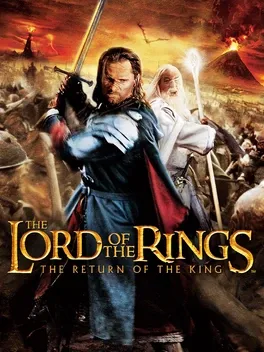
The Lord of the Rings: The Return of the King
Introduction
In the early 2000s, Electronic Arts achieved something rare in the gaming industry, creating a movie tie-in that was both a commercial juggernaut and a critical darling. The Lord of the Rings: The Return of the King, often abbreviated as LotR: RotK, served as more than just a companion piece to the final film; it was a definitive hack-and-slash experience. Building on the massive success of its predecessor, the game translated the high-stakes battles for Middle-earth into an interactive masterpiece that remains a gold standard for film-to-game adaptations even decades later.
Story & Setting
Following the climax of Peter Jackson’s cinematic trilogy, the game takes players from the eerie Paths of the Dead to the fiery slopes of Mount Doom. Unlike the previous entry which focused on Rohan, this action-adventure sequel splits the narrative into three distinct paths. The 'Path of the King' follows Aragorn, Legolas, and Gimli as they recruit the Army of the Dead and defend Gondor. The 'Path of the Wizard' features Gandalf leading the defense of Minas Tirith against the overwhelming Orc legions. Finally, the 'Path of the Hobbits' follows Frodo and Sam on their perilous journey into Mordor. This structure allows players to experience the diverse perspectives of the Fellowship as they race toward the final confrontation at the Black Gate.
Gameplay
Gameplay in this title is a significant evolution of the combat seen in The Two Towers. It is a fast-paced experience where players must master a variety of combos, parries, and ranged attacks to survive. Each character feels unique; for example, Gandalf utilizes powerful area-of-effect magic, while Aragorn excels in heavy melee strikes. A standout feature is the interactive environment; players can trigger traps, launch catapults, or use spears scattered across the battlefield to dispatch enemies. The progression system allows players to spend experience points to unlock new moves for the entire Fellowship or specific individuals. Additionally, the game introduced a highly requested local co-op mode, allowing two friends to battle side-by-side. Beyond the main cast, players can unlock Merry, Pippin, and Faramir, each bringing their own flavor to the chaotic battles.
This game was released on several major home consoles during the peak of the sixth generation, ensuring that fans across the globe could enjoy the adventure on their preferred hardware.
Legacy
The legacy of the title is cemented by its critical and commercial success. Known as Le Seigneur des Anneaux : Le Retour du Roi in French-speaking regions and Der Herr der Ringe: Die Rückkehr des Königs in Germany, the game was praised for its seamless integration of film footage with real-time gameplay. In Portugal and Brazil, where it was released as O Senhor dos Anéis: O Regresso do Rei and O Senhor dos Anéis: O Retorno do Rei, it became a staple of the era's gaming libraries. It proved that movie-licensed games could be mechanically deep and visually stunning, rather than just quick cash-ins.
Fun Facts
The game includes extensive 'Making Of' documentaries as unlockable content, providing a deep dive into the production. These features include interviews with the film's lead actors, who also provided their voices for their digital avatars. Furthermore, the game’s level design was heavily influenced by the actual movie sets. The development team at EA Redwood Shores worked closely with Weta Digital to ensure every location, from the Tower of Cirith Ungol to the Pelennor Fields, was as authentic to the cinematic vision as possible, creating a truly immersive experience for fans of Tolkien's world.