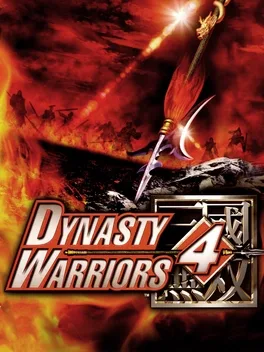
Dynasty Warriors 4
Introduction
Dynasty Warriors 4 is a name that resonates with any fan of large-scale tactical action. Released at the peak of the PlayStation 2's dominance, this title solidified Omega Force’s reputation for creating the iconic "one-versus-thousands" experience. Whether you knew it as Dynasty Warriors 4 or by its Japanese title, Shin Sangoku Musou 3, it represented the pinnacle of the series' evolution during the early 2000s. It remains a beloved classic for its blend of historical drama and satisfying, frantic combat.
Story & Setting
Like its predecessors, the game is deeply rooted in the 14th-century historical novel Romance of the Three Kingdoms, written by Luo Guanzhong. This epic chronicles the chaotic end of the Han Dynasty and the subsequent rise of the Three Kingdoms: Wei, Wu, and Shu. While Dynasty Warriors 4 remains faithful to the core cast of heroes and villains—such as the virtuous Liu Bei, the ambitious Cao Cao, and the legendary warrior Lu Bu—it took a significant step away from rigid historical accuracy. For the first time, players were given more agency in how the storyline progressed. The narrative was organized by kingdom rather than individual character arcs, allowing for a more cohesive sense of progression across the era's major conflicts and providing the user with more input on how the story unfolds.
Gameplay
The core gameplay remains the satisfying hack-and-slash formula that defines the Musou genre. Players select a powerful officer and deploy onto a vast battlefield filled with hundreds of enemy soldiers. The primary objective is usually to defeat the enemy commander while maintaining troop morale and protecting your own base. Dynasty Warriors 4 introduced several key refinements, such as the ability to customize your character's weapon through a sophisticated experience system rather than relying solely on random item drops. The centerpiece of combat remains the Musou attack—a devastating special move fueled by a regenerating gauge. Additionally, the introduction of duels allowed players to engage in one-on-one combat with enemy officers in a closed arena, adding a layer of tension to the frantic field combat. Players could also command a small squad of bodyguards, adding a light tactical layer to the intense action.
This game was released on several platforms, including the PlayStation 2, Xbox, and PC. Dynasty Warriors 4 initially launched on the PS2 in early 2003 before being ported to the Xbox later that year, and eventually arriving on PC in 2005 under the title Dynasty Warriors 4 Hyper.
Legacy
Dynasty Warriors 4 is often cited by long-time fans as one of the best entries in the franchise. Its commercial success helped popularize the hack-and-slash genre in the West, leading to dozens of spin-offs and high-profile collaborations with other major intellectual properties. It struck a perfect balance between technical performance and chaotic action, pushing its original hardware to its limits with the sheer number of on-screen sprites. The Hyper version on PC also showcased the potential for higher resolutions and smoother frame rates, setting a standard for future ports of the series. The influence of this specific installment can still be seen in the design of modern Musou titles.
Fun Facts
In Japan, the game is titled Shin Sangoku Musou 3 because the original Dynasty Warriors was a one-on-one fighting game titled Sangoku Musou, making this the third entry in the 3D action reboot. Interestingly, the PC version, Dynasty Warriors 4 Hyper, was notable for featuring significantly improved enemy AI and higher troop density compared to the original console versions. Furthermore, the game introduced a robust Edit Mode, which allowed players to create their own custom officers with unique move sets for use in various game modes.