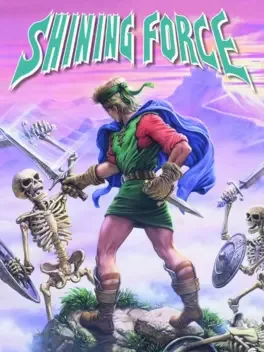
Shining Force
Introduction
Shining Force remains one of the most beloved tactical role-playing games ever to grace the 16-bit era. Developed by Climax Entertainment and Camelot Software Planning, it challenged the dominance of traditional RPGs by introducing deep strategic combat that felt accessible yet complex. Whether you know it as simply Shining Force or by its more descriptive title, Shining Force: The Legacy of Great Intention, the game captured the hearts of Sega fans in the early 1990s. Its blend of colorful sprite animation, cinematic battle sequences, and high-fantasy world-building established a blueprint for many titles that followed. As the first entry in the Shining series to feature tactical grid-based combat, it moved away from the first-person dungeon crawling of its predecessor and created a legacy that persists to this day through various remakes and re-releases.
Story & Setting
The narrative of Shining Force: The Legacy of Great Intention is set on the continent of Rune, a land long ago ravaged by a war between the forces of light and the monstrous Dark Dragon. After a thousand years of peace, the malevolent Darksol seeks to break the ancient seals and resurrect the beast to plunge the world into shadow. Players step into the boots of Max, a young swordsman in the Kingdom of Guardiana. Tasked by the King to investigate the movements of the neighboring Kingdom of Runefaust, Max soon finds himself leading the eponymous Shining Force. This ragtag group of warriors, mages, and healers must travel across diverse biomes—from lush forests to barren deserts—to stop Darksol's plan. The story is a classic tale of good versus evil, populated by a memorable cast of thirty recruitable characters, each with their own unique motivations for joining the cause.
Gameplay
At its core, Shining Force is a turn-based tactical RPG that emphasizes positioning and resource management. Battles take place on square grids, where each unit occupies a single square. Movement is governed by a unit's Move statistic, which determines how many squares they can traverse across the varied terrain of the battlefield. Once a unit has moved, they have a variety of actions at their disposal. They can initiate an attack, cast a powerful spell, use an item from their inventory, or search their immediate surroundings for hidden treasures. If no immediate action is required, the unit can simply 'stay,' ending their turn.
One unique aspect of the gameplay is how turns are calculated. Unlike some strategy games where one side moves all units at once, the order here is determined by each individual unit's agility score coupled with a random seed, making for a dynamic and sometimes unpredictable turn flow. It is important to note that certain non-combat actions, such as equipping or dropping items, do not consume a unit's action phase, allowing for tactical flexibility. Combat interactions are strictly divided: offensive actions like physical strikes and magic can only be directed at enemies, while supportive actions like healing or stat-enhancing magic are reserved for allies.
This classic title has been made available across several generations of hardware, ensuring its accessibility for both retro enthusiasts and new players alike. While it began its life on the Sega Mega Drive/Genesis, it has since seen re-releases on digital storefronts and legacy collections.
Legacy
The impact of Shining Force on the gaming landscape cannot be overstated. Along with the Fire Emblem series, it helped popularize the tactical RPG genre outside of Japan. Its cinematic battle transitions—shifting from a top-down view to a vibrant, third-person perspective during attacks—were revolutionary for the time and added a level of excitement to the turn-based formula. The success of The Legacy of Great Intention paved the way for numerous sequels, most notably Shining Force II, and inspired a host of modern indie developers who seek to capture that specific 16-bit magic. Its community remains active, producing fan translations, balance mods, and retrospectives that celebrate its enduring charm.
Fun Facts
- Despite the serious stakes of the plot, the game includes a secret character named Jogurt, a hamster-like creature who always deals exactly 1 damage.
- The protagonist, Max, is traditionally a silent hero, but his leadership is central to the lore of the entire Shining universe.
- The 'Egress' spell is a vital mechanic that allows players to retreat from a battle while keeping all experience earned, effectively allowing for strategic grinding.
- In the Japanese version, the difficulty is slightly different compared to the Western release, featuring minor tweaks to enemy AI and unit stats.