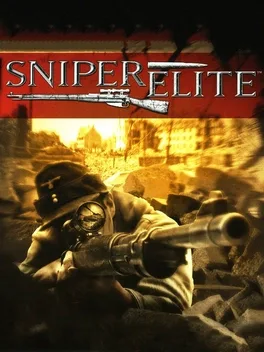
Sniper Elite
Introduction
In the landscape of World War II shooters, few titles have managed to carve out a niche as specific and enduring as Sniper Elite. Released in 2005, this title—often referred to by its full name, Sniper Elite: Berlin 1945—shifted the focus away from the high-octane frontline combat popularized by other franchises of the era. Instead, it introduced players to the slow, methodical, and high-stakes world of a covert operative. Developed by Rebellion Developments, the game was a pioneer in realistic sniping mechanics, offering a blend of third-person action and tactical strategy that rewarded patience over twitch reflexes. It remains a foundational entry in the stealth genre, setting the stage for one of gaming's most recognizable tactical series.
Story & Setting
The game is set against the backdrop of one of history's most chaotic moments: the Battle of Berlin in April and May of 1945. As the Third Reich collapses under the weight of the advancing Allied forces, the city has become a graveyard of bombed-out buildings and desperate skirmishes. Players take on the role of Karl Fairburne, an American agent working for the Office of Strategic Services (OSS), the organization that would eventually evolve into the CIA.
Fairburne is sent into the heart of the ruins with a mission of critical importance to the future of global security. His objective is to prevent the Soviet Union from obtaining German nuclear research and the scientists behind the V-2 rocket program. Disguised as a German sniper, he must navigate the complex political and physical battlefield where the remains of the German army and the encroaching Soviet forces are in direct conflict. The narrative of Sniper Elite: Berlin 1945 effectively captures the tension of the early Cold War era, turning the ruins of the German capital into a playground for espionage and long-distance lethality.
Gameplay
The gameplay of Sniper Elite is defined by its commitment to the technical aspects of marksmanship. Across 28 challenging missions, players must utilize stealth tactics to navigate hostile territory. Unlike contemporary shooters, the environment is just as much of an obstacle as the enemies themselves. Success requires finding the perfect vantage point and carefully planning every move. The game demands that players think like a real sniper, considering their surroundings and the consequences of every shot fired.
What truly distinguishes the experience is the sophisticated ballistics system. When lining up a shot, players must account for gravity, wind direction, and wind strength. Even the protagonist's heart rate and breathing play a role; a high heart rate makes the rifle sway, while holding one's breath momentarily steadies the aim. Additionally, players can use environmental background noises, such as thunder or artillery explosions, to mask the sound of their rifle. A particularly successful or long-distance shot is often rewarded with the iconic 'bullet cam,' a cinematic feature that follows the bullet in slow-motion from the barrel of the gun to the moment of impact, providing a visceral sense of accomplishment for a well-calculated execution.
This game was released on several platforms, including the wii, xbox and playstation 2.
Legacy
Sniper Elite's legacy is defined by its influence on the tactical shooter genre. At a time when WWII games were becoming repetitive, it offered a completely different pace that emphasized intelligence over brawn. Its success led to a thriving franchise that continues to release highly-rated sequels to this day. The series is still celebrated for its signature 'bullet cam' and its dedication to ballistic realism. By focusing on the OSS and the early shadows of the Cold War, it also provided a fresh historical perspective that resonated with players looking for a more mature and nuanced take on wartime storytelling.
Fun Facts
- The protagonist's agency, the OSS, was the real-world predecessor to the CIA and was known for its innovative and often dangerous intelligence-gathering operations during World War II.
- Although the game is widely known simply as Sniper Elite, the name Sniper Elite: Berlin 1945 was used in several regions and on specific box art to emphasize its historical setting.
- The 'bullet cam' was so popular that it became a permanent fixture of the series, eventually evolving into the detailed X-ray kill cams seen in the newer sequels.
- Despite being a 2005 title, the game received a late-lifecycle port to the Nintendo Wii in 2010, which utilized the Wii Remote for motion-controlled aiming.