Summoner
Introduction
Summoner was a landmark title for the early lifecycle of the PlayStation 2, representing an ambitious attempt by developer Volition to create a deep, narrative-driven Western RPG for a console audience. Released in 2000, it was one of the first games to showcase the potential of the sixth generation of consoles, offering a scale and complexity that was rarely seen in the genre at the time. As a launch title, it captured the imagination of gamers who were looking for something more substantial than arcade-style experiences, providing a dark and immersive world filled with ancient prophecy and dangerous magic. Even decades later, it remains a notable example of early 2000s world-building.
Story & Setting
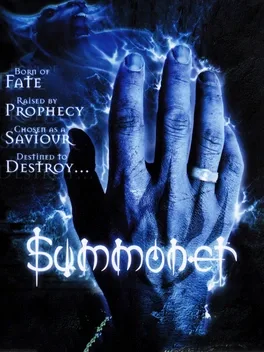
The narrative of Summoner is centered on Joseph, a young man who was born with the mark of the Summoner on his hand. This mark grants him a power greater than that of emperors or gods, but it is a power he fears and loathes. As a child living in the village of Ciran, Joseph attempted to use his abilities to save his home from marauders. He successfully summoned a demon, but the creature was uncontrollable; it slaughtered the attackers and then turned on the villagers Joseph loved. Watching his home burn and his people perish, Joseph discarded his summoning ring and fled, spending nine years in hiding.
However, destiny is not easily escaped. The continent of Medeva is soon threatened by the expansionist armies of Orenia, led by the ruthless Emperor Murod. Joseph is forced out of his self-imposed exile to confront the prophecy he was born to fulfill. The journey takes him across diverse landscapes, from the sprawling city of Lenele to the icy peaks of the north, as he seeks to recover the lost rings of the Summoner and stop the Orenian tide. The setting is grounded in a sense of history and tragedy, where the line between hero and monster is often blurred.
Gameplay
The gameplay in Summoner is a unique blend of real-time combat and tactical party management. Players control Joseph and a roster of companions, including the skilled thief Flece, the noble warrior Jekhar, and the scholarly monk Rosalind. Combat utilizes a "Chain Attack" system, where players must time button presses to coincide with an icon appearing on the screen. Successful timing allows characters to perform consecutive strikes, each with different status effects or damage multipliers, adding a rhythmic and engaging layer to the standard RPG encounter.
As the title suggests, the summoning mechanic is the core of Joseph's repertoire. By equipping different rings found throughout the world, Joseph can call forth various creatures to fight alongside the party. These summons act as independent party members with their own health and abilities. However, if Joseph’s health drops too low or he loses focus, the summon can become "unbound," turning into a hostile entity that attacks both friends and foes alike. Beyond combat, the game features a heavy emphasis on exploration, side-quests, and character progression, with a world map that triggers random encounters similar to classic tabletop RPGs.
This game was released on several platforms, including the PlayStation 2 and later on PC systems.
Legacy
Summoner is remembered today as a cult classic that proved Western-style RPGs could find a dedicated home on home consoles. While it suffered from some technical limitations of its time, such as significant fogging to mask draw distances, its writing and atmosphere were highly praised. It was successful enough to spawn a sequel, Summoner 2, which further refined the combat and narrative. For the developer, Volition, it marked a significant pivot from their roots in flight simulation and space combat (the Descent series) toward the character-driven action games they would later become famous for, such as the Saints Row franchise.
Fun Facts
One of the most famous aspects of Summoner is an easter egg hidden within the game. Volition created a humorous video using the game’s engine that features the characters reenacting a classic Dungeons & Dragons comedy routine by the comedy troupe The Dead Alewives. This video, often called "The Summoner Skit" or "I'm Attacking the Darkness," became one of the earliest viral videos in the gaming community. Additionally, despite its serious tone, the game was noted for having a massive script that featured thousands of lines of voiced dialogue, a significant feat for a console game at the turn of the millennium.