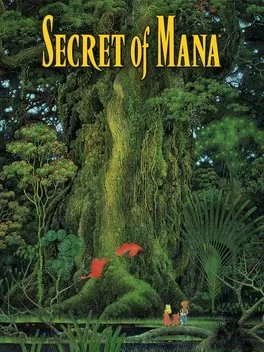
Secret of Mana
Introduction
Few titles in the history of gaming evoke as much nostalgia and reverence as Secret of Mana. Originally released in Japan in 1993 under the title Seiken Densetsu 2, this action RPG took the world by storm, offering a vibrant and fluid alternative to the turn-based adventures that dominated the era. Developed and published by Square, it bridged the gap between the high-stakes drama of traditional RPGs and the immediate gratification of action games. With its stunning 16-bit visuals, an ethereal soundtrack, and a world that felt truly alive, Secret of Mana quickly established itself as a masterpiece of the Super Nintendo library, captivating both beginners and veteran gamers alike.
Story & Setting
The narrative of Secret of Mana centers on the mystical power of Mana, an ancient energy that sustains the world. The story follows a young boy named Randi, who inadvertently pulls the legendary Mana Sword from a stone near his village, unknowingly breaking a seal that kept ancient monsters at bay. Cast out by his community, Randi embarks on an epic quest to revitalize the sword’s power and save the world from the looming threat of the Vandole Empire.
During his travels, Randi is joined by two memorable companions: Primm, a determined young woman from a noble family, and Popoi, a mischievous and amnesiac sprite. Together, the trio must travel across diverse landscapes—from lush tropical forests to frozen tundras—to seek out the eight elementals. These spirits, representing forces like Fire, Water, and Wind, grant the heroes the magic needed to thwart the Empire’s plan to restore the Mana Fortress and seize total control of the world's life force.
Gameplay
What truly set Secret of Mana apart from its contemporaries was its innovative real-time battle system. Eschewing the menu-heavy turn-based combat of the time, the game allowed players to engage enemies directly on the field. The introduction of the Ring Command menu system was a game-changer for the genre. With a single button press, a circular menu appears around the active character, allowing players to cycle through items, weapons, and spells without the need to switch to a separate screen. This system ensured the pacing remained fast and seamless.
In addition to the Ring Command, the game featured a unique stamina bar that determined the strength of a player's physical attacks. Swinging a weapon wildly would result in weak strikes, requiring players to time their attacks strategically for maximum impact. Perhaps most impressively for the time, Secret of Mana supported three-player cooperative play via the SNES Multitap, allowing friends to take control of Primm and Popoi to tackle the adventure together.
This game was released on several platforms, including the original Super Famicom in Japan and various iterations of the Nintendo Virtual Console over the years.
Legacy
The legacy of Secret of Mana is profound. It solidified the Mana series (Seiken Densetsu) as a standalone franchise, moving it away from its origins as a Final Fantasy spin-off. Its influence can be seen in countless modern action RPGs that prioritize seamless exploration and combat. The Ring Command system, first introduced here, became a hallmark of the series and appeared in nearly every subsequent entry. Beyond its mechanics, Hiroki Kikuta’s soundtrack is frequently cited as one of the best in gaming history, with its experimental sounds and emotional depth continuing to inspire composers today.
Fun Facts
- The CD-ROM Connection: Secret of Mana was originally developed for the ill-fated "Nintendo PlayStation" (the SNES-CD peripheral). When the project was canceled, the developers had to drastically cut content to fit the game onto a standard cartridge.
- The Iconic Mascot: The Rabite, the cute but aggressive yellow creature encountered early in the game, became so popular that it has served as the mascot for the entire Mana franchise ever since.
- A Haunting Intro: The whale-like sounds heard in the opening theme, "Fear of the Heavens," were specifically designed by composer Hiroki Kikuta to create an otherworldly, ancient atmosphere that set it apart from typical fantasy music.